
Captains of Ancient Routes
Since the time of Sindbad the Sailor, and even earlier, seamen have coursed the Indian Ocean waters on their traditional wooden boats (Lenj) going from the Persian Gulf to India and Africa trading all sort of goods. Lenjs are traditionally hand-built vessels that are used by inhabitants of the of the Persian Gulf for sea journeys, trading, fishing, and pearl diving. The related traditional knowledge includes comprehensive oral literature, performing arts, sailing, navigation as well as weather forecasting techniques and the skills of wooden boatbuilding itself. Today, with emergence of new technology, Lenjs are being pushed off from their ancient routes putting the invaluable traditional knowledge in danger.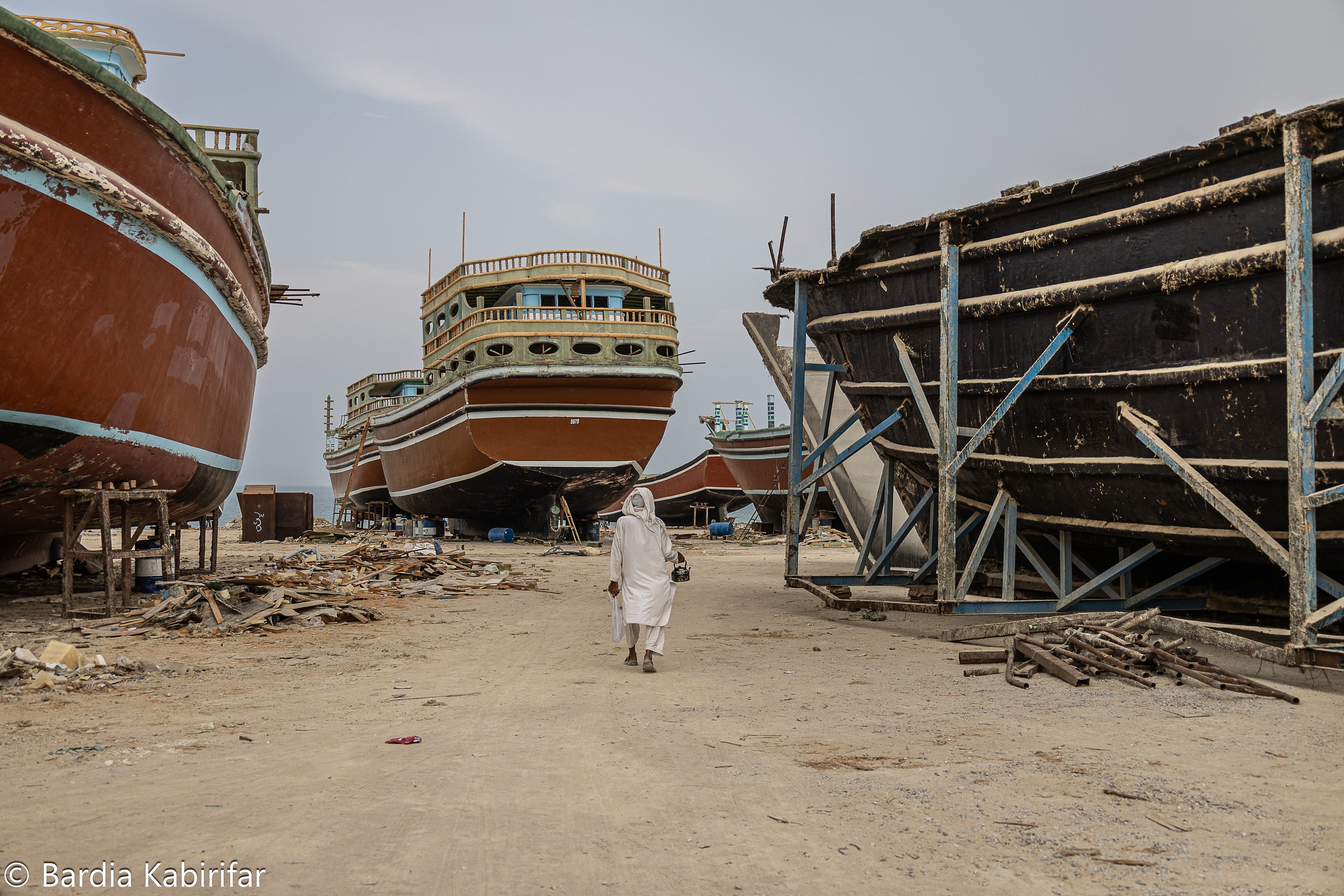
A shipbuilder walks in one of the Iran's largest fiberglass Lenj construction workshops at Peiposht, south of Iran. Lenjs (also known as dhow) are traditional trading vessels that have been used since hundreds of years ago in the Persian Gulf. Nowadays, due to lack of high-quality timbers and soaring construction costs, wooden Lenjs are giving their place to the fiberglass ones that are cheaper but have lower quality. The current trend might lead to no more shipwrights left who are skilled at construction traditional wooden Lenjs. (October 21st, 2023 Qeshm Island, Iran)
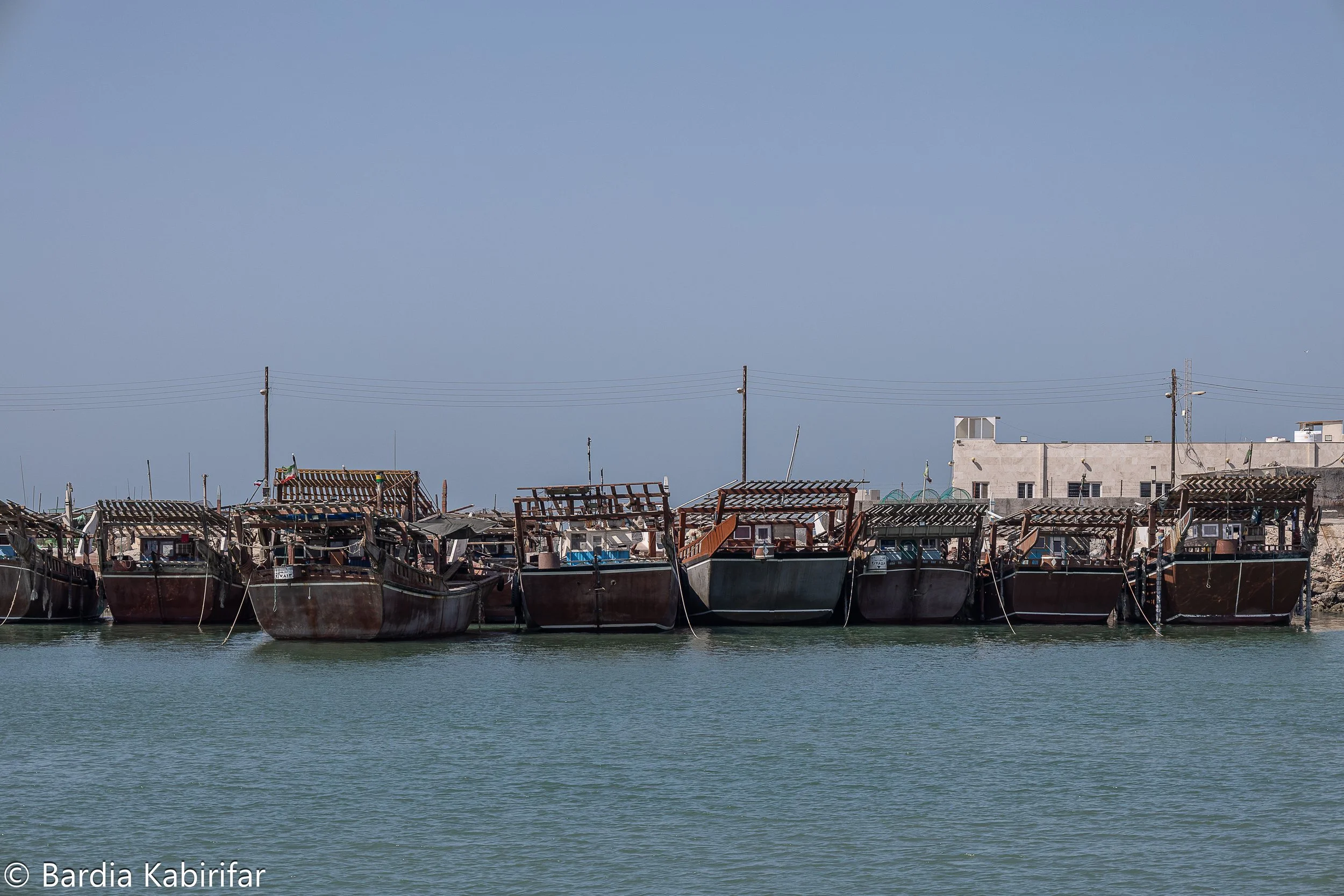
Couple of Lenjs are docked at Bushehr fishing pier. These hand-built wooden vessels have been used by inhabitants of the northern coast of the Persian Gulf for sea journeys, trading, fishing and pearl diving. The art of constructing Lenjs, specially the wooden ones, is one of the country's intangible cultural heritages dating to several hundred years ago. (October 27th, 2023 Bushehr, Iran)
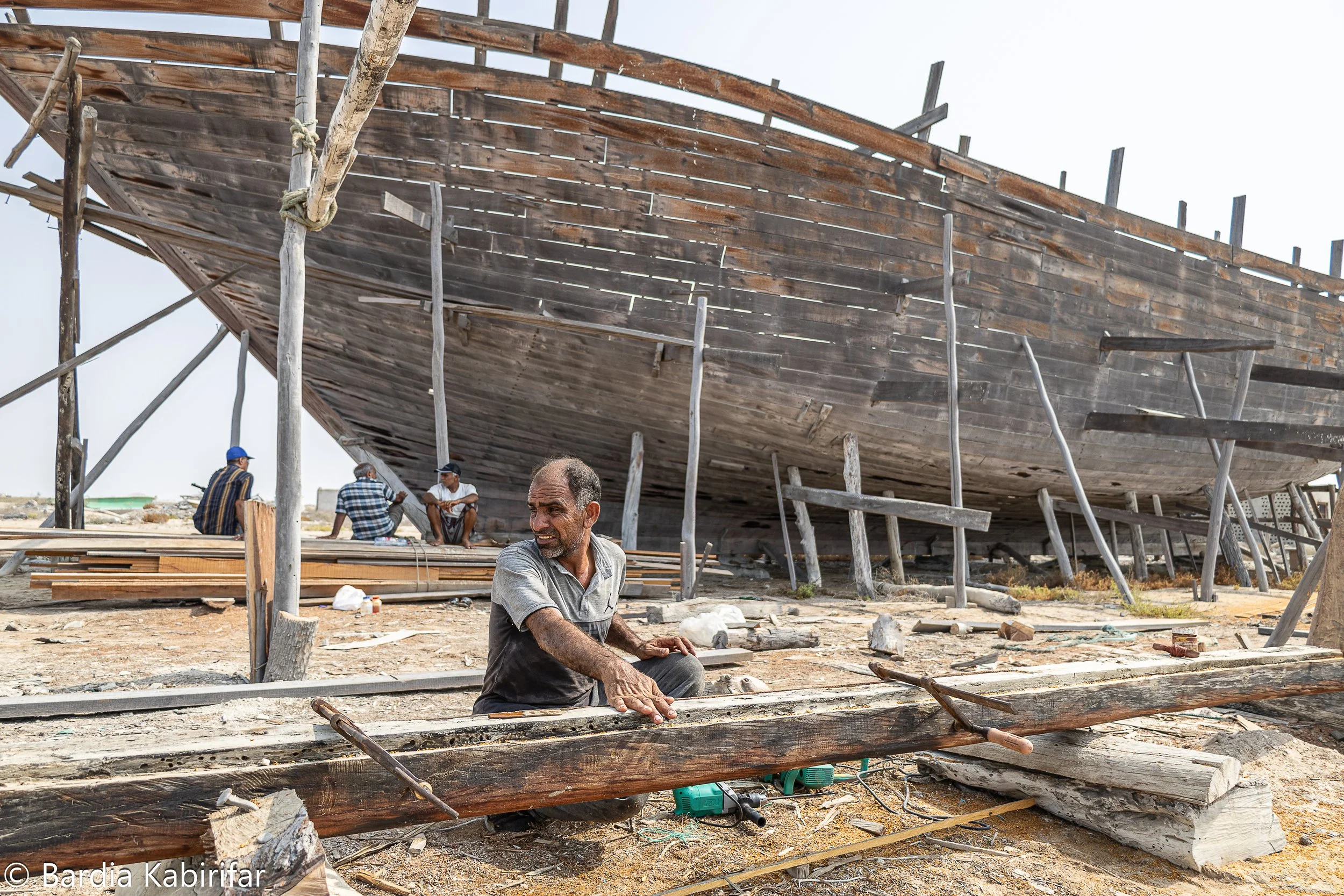
A shipwright constructs a wooden Lenj from scratch. Very few skillful workers are left who are able to build traditional wooden Lenjs. With increasing prices and lack of high-quality timbers, demand for wooden Lenjs has remarkably dropped giving its place to modern, cheaper, but less favorable fiberglass ones. Experienced sailors highly prefer wooden Lenjs due to their better aquadynamic as well as repairability. As an intangible cultural heritage in need of urgent safeguarding, its crucial that the knowledge of building wooden Lenjs be transferred to next generation and to be well-documented to avoid its gradual fade. (October 21st, 2023 Guran, Iran)
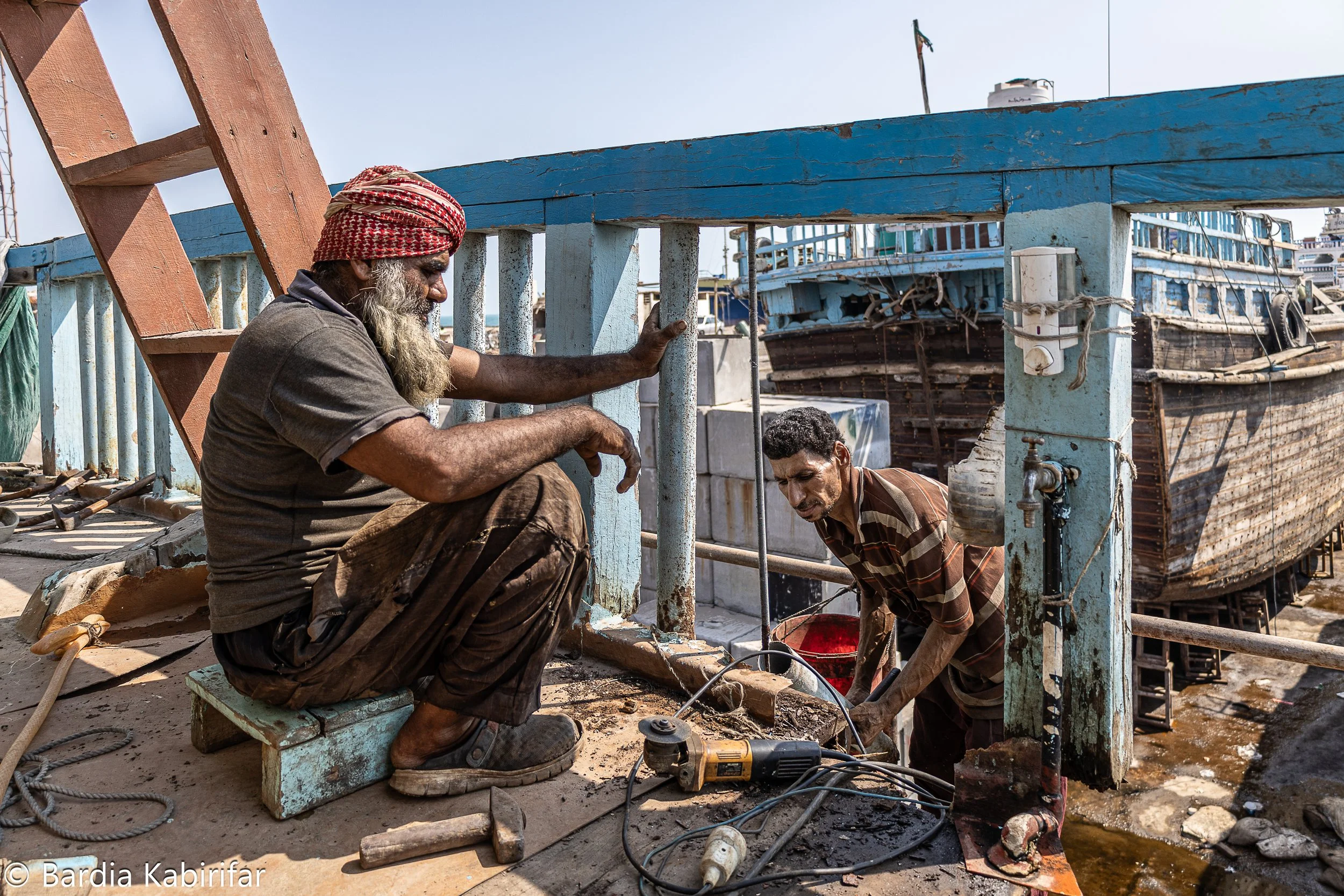
Several wooden Lenjs are under repair at one of the only left wooden Lenj workshops at Kong, Iran. Several years of experience is needed for workers to learn the skills needed for building traditional Lenjs. Despite decreasing demand for brand new wooden Lenjs, due to high material and construction costs, people sometimes invest in the older Lenjs, even the ones that can't be used for trading purposes, and repair them to be used for tourism purposes. (October 24th, 2023 Kong, Iran)
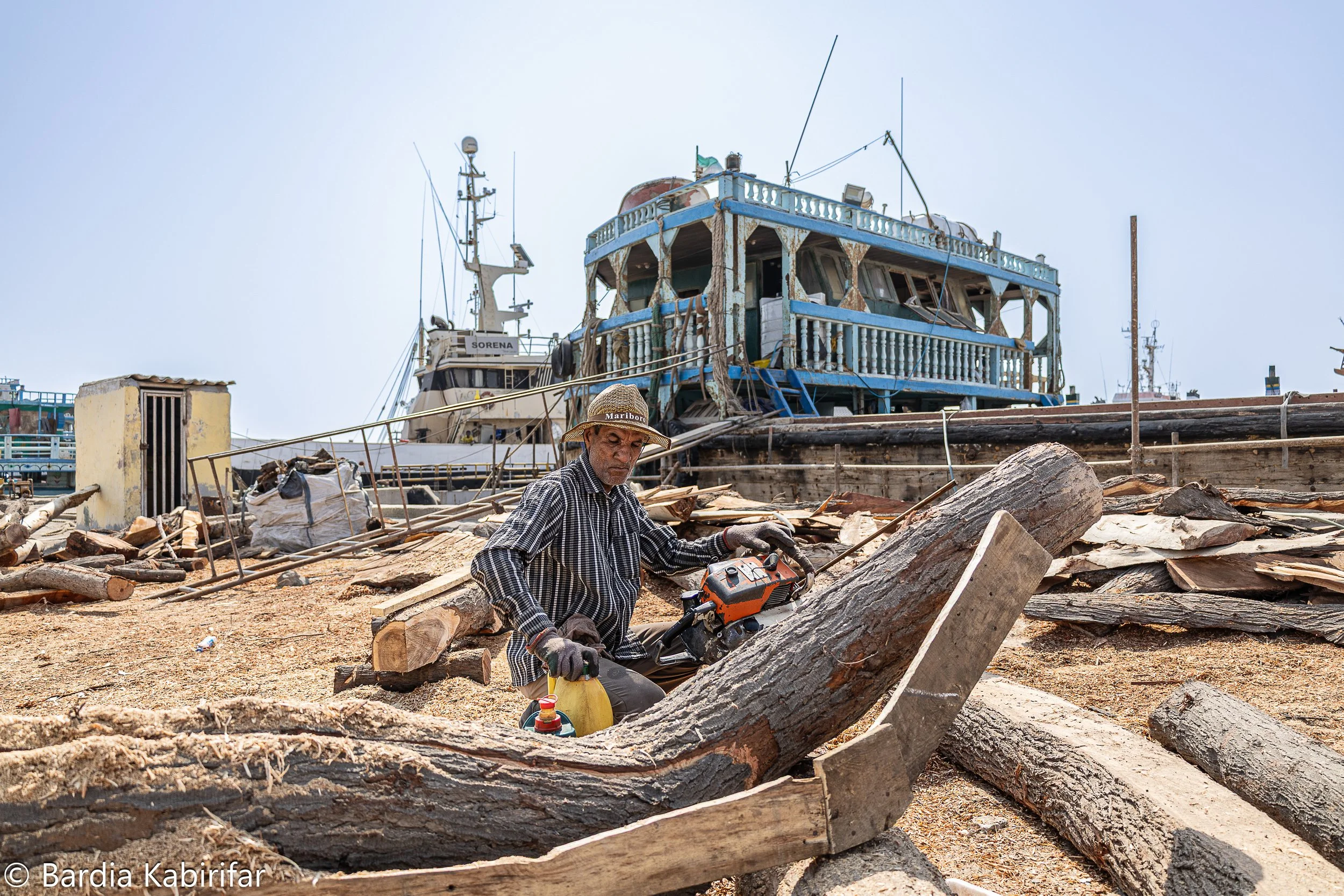
A shipwright cuts timbers to be used for repairing damaged wooden Lenjs. Many wooden Lenj construction workshops are being transformed into repair shops for the older Lenjs as demand for new wooden Lenjs is giving its place to the fiberglass ones. (October 24th, 2023 Kong, Iran)
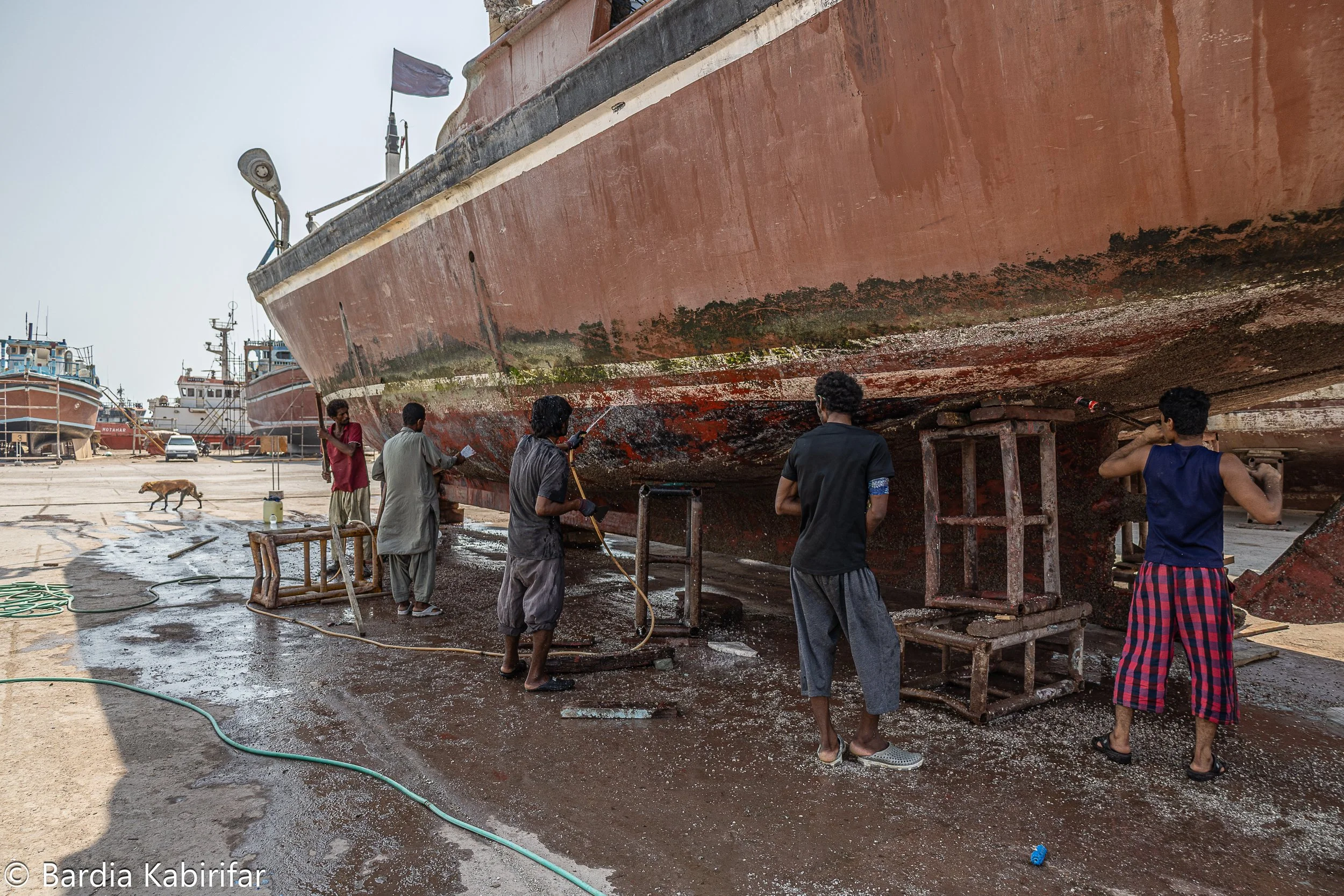
Workers clean a fiberglass Lenj as a part of its yearly maintenance plan. Maintenance costs take a heavy toll on Lenj owners who are already struggling with diminishing market as cargo ships are taking over a big part of the market. Many wooden Lenj construction workshops are being transformed into repair shops for older Lenjs as demand for new wooden Lenjs is giving its place to fiberglass ones. Currently, most of the Lenjs are used for fishing or exporting bulk material to nearby countries such as UAE. (October 24th, 2023 Kong, Iran)
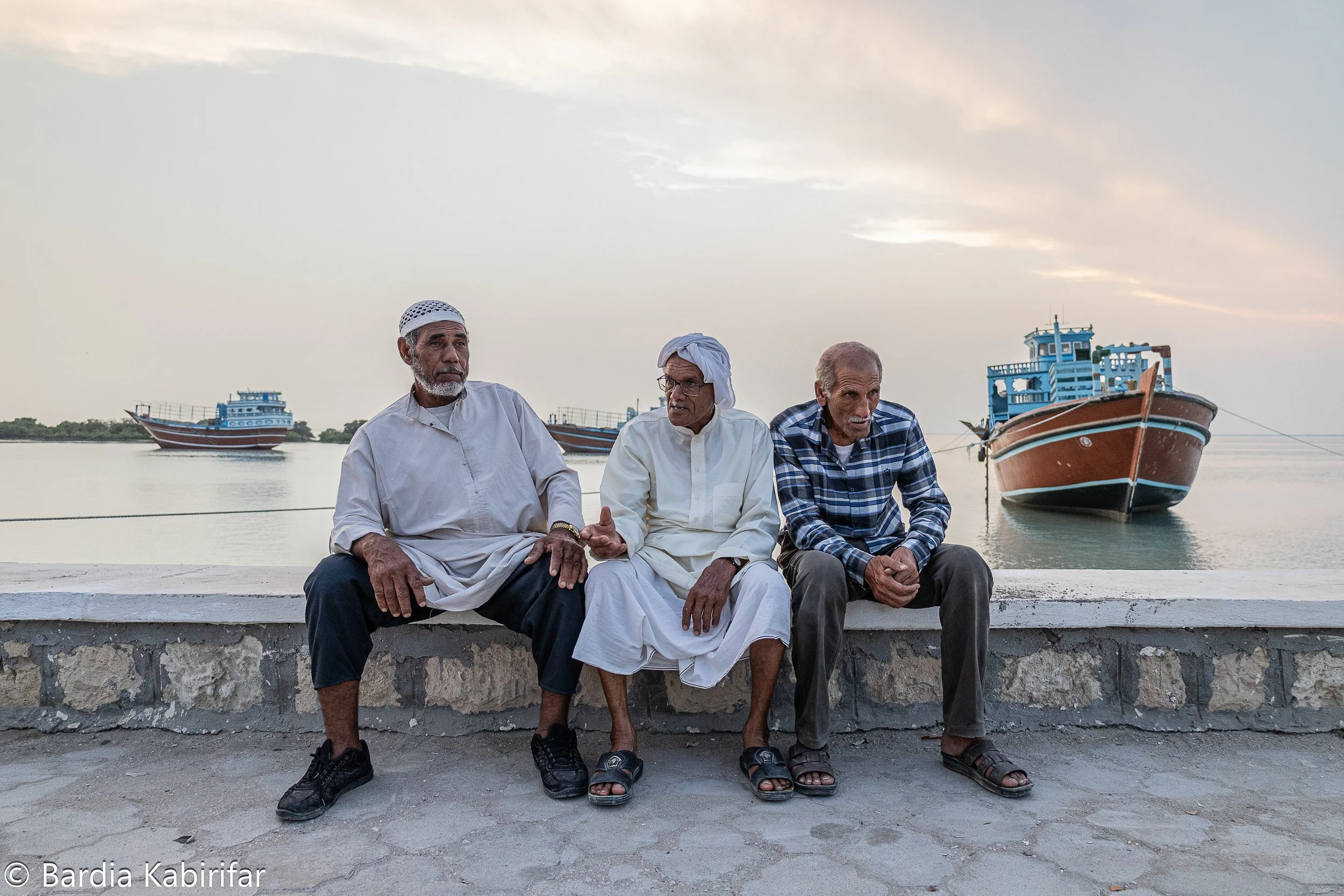
A group of elderly Nakhodas (Lenj captains) are sitting at the waterfront. There is only a handful of Nakhodas still alive who used to travel with sail Lenjs before they give their place to the Lenjs with engine. The transition occurred gradually over the 50s and 60s. By the 70s, most of the lenjs had either both sail and engine or only engine. By putting sail Lenjs aside, extremely invaluable sailing knowledge was put in danger. (October 21st, 2023 Laft, Iran)
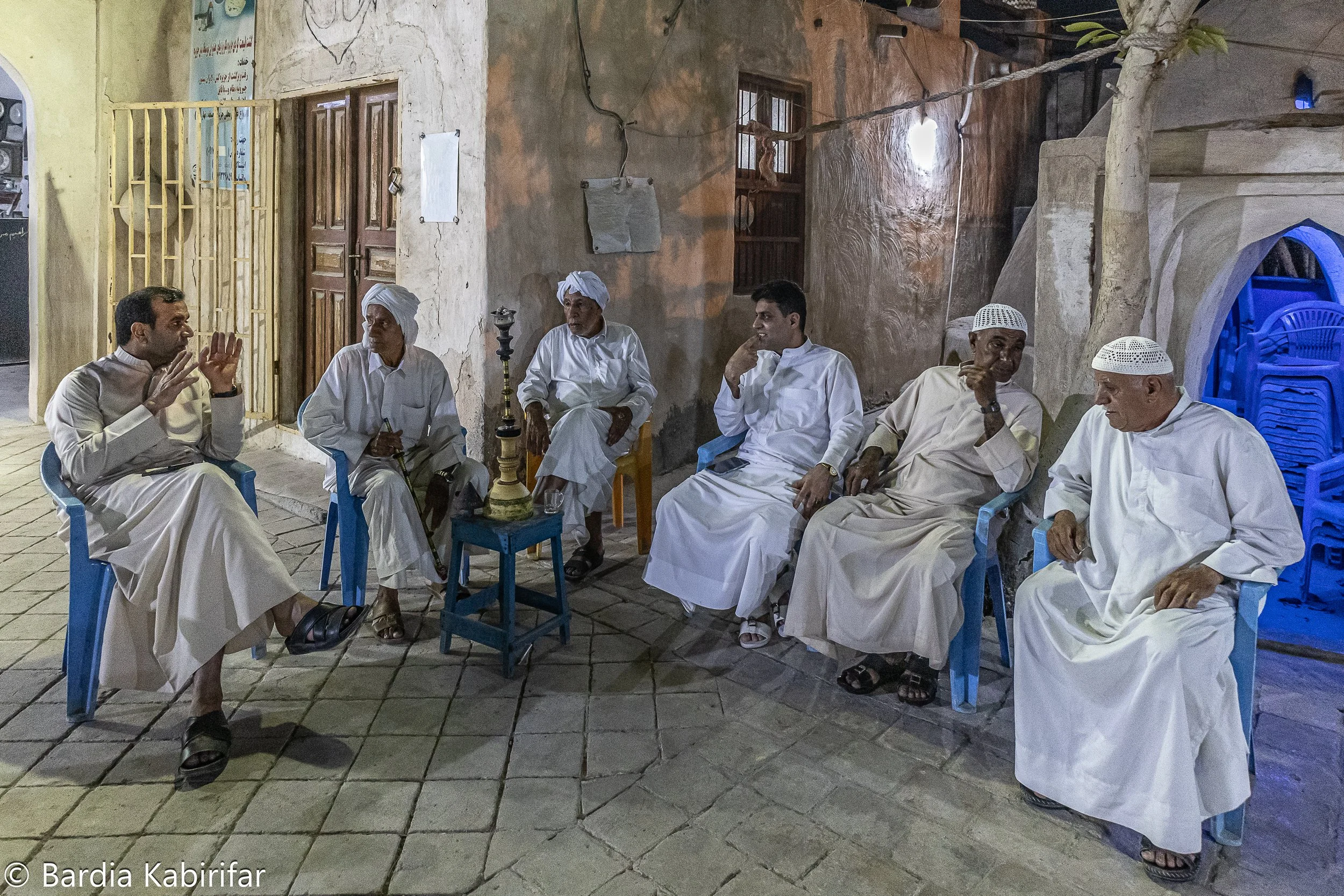
A group of Nakhodas smoking Hookah in a local teahouse. Only elderly Nakhodas had a few travels with sail Lenjs at the beginning of their careers. It required much more sophisticated sailing knowledge as well as more crew on board to raise and manage different sails. Nakhodas and sailors had to be skilled at managing the number and position of sails based on the pressure and direction of wind. Several sailors were needed to manage sails specially at night and during storm. (October 23th, 2023 Kong, Iran)
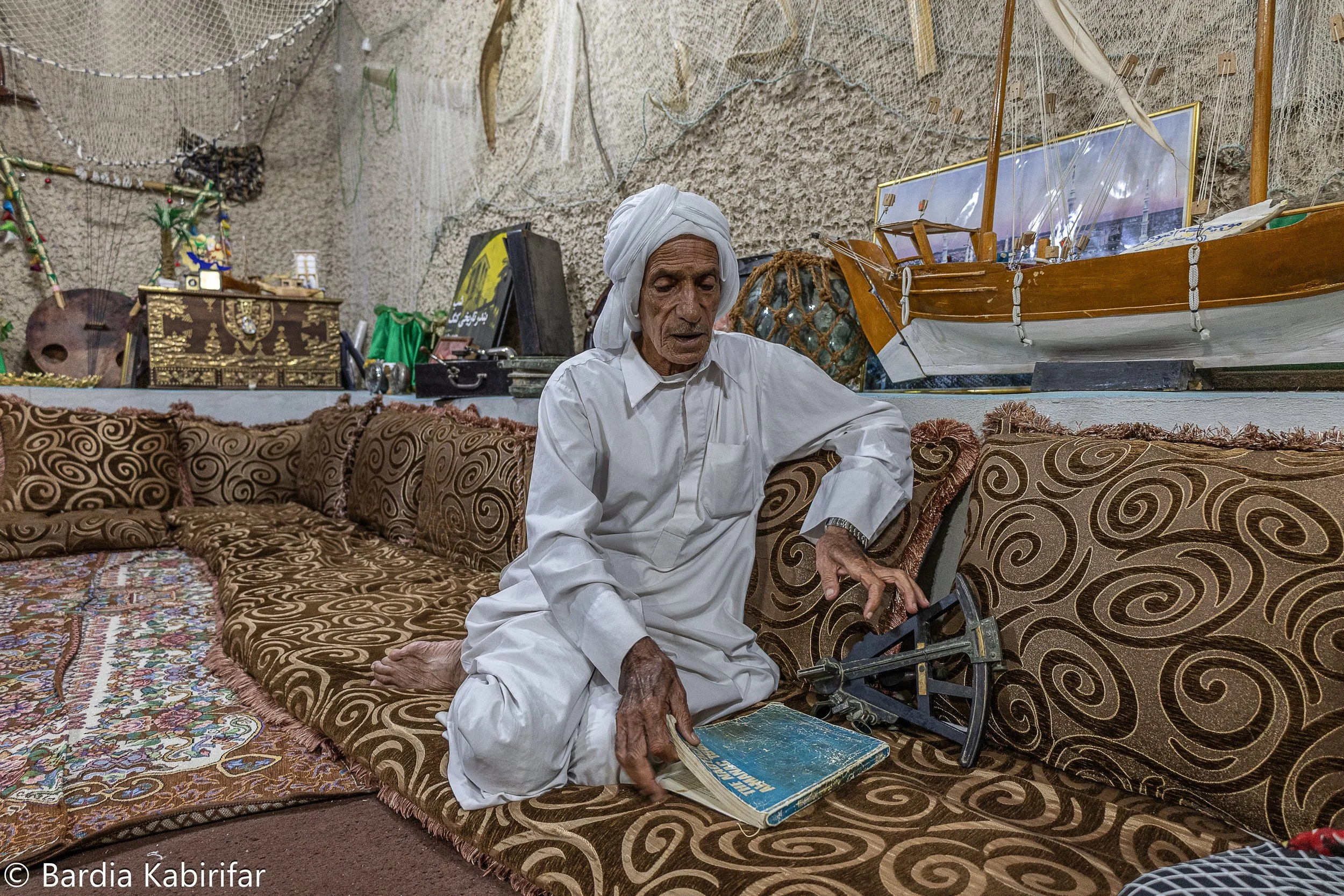
Nakhoda Sarhang explains about steering Lenjs in traditional way before the era of GPS. "Navigation was mainly done by sextants, compasses and charts. Precise navigation techniques were needed to locate the ship according to the position of astronomical objects using special formulae. The navigation and weather forecasting knowledge was traditionally passed on from father to son. Nakhoda was responsible to verify the location and direction of the vessel everyday at noon using compass and charts." (October 22nd, 2023 Kong, Iran)
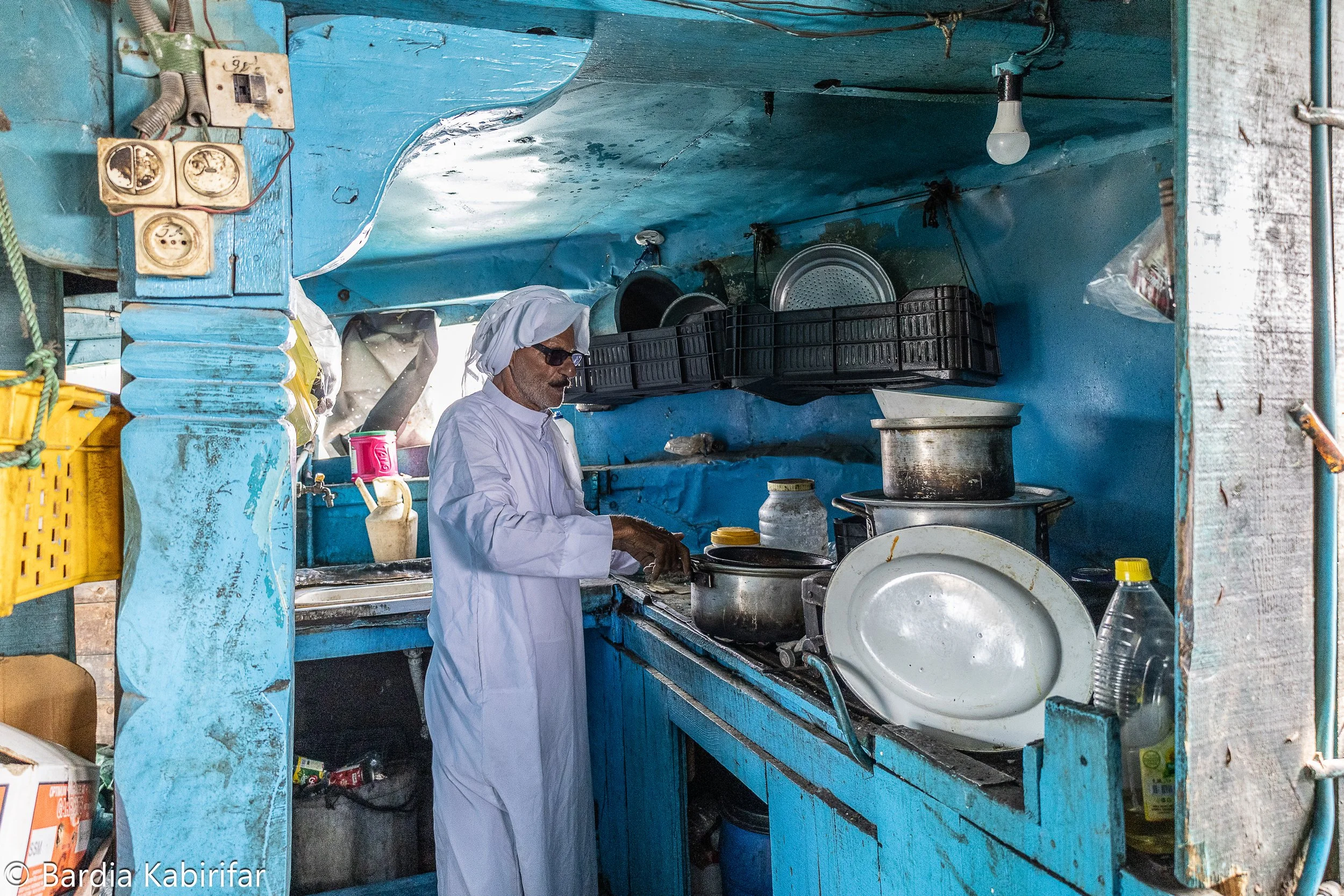
Nakhoda Ismael prepares food on board of his Lenj. "In the past, Lenjs were the main mean of sea trade. We used to travel to Kuwait, Qatar, Bahrain, Emirates, Oman, Yemen, India, and also the east coast of Africa. There were different types of missions, solo trips to the Persian Gulf countries, to India, and to Africa. The longest journey, which would take 9 months, was to India and Africa together. Each Lenj would take 20 to 30 crew members based on the vessel's size where each crew member had his unique responsibilities." (October 21st, 2023 Guran, Iran)
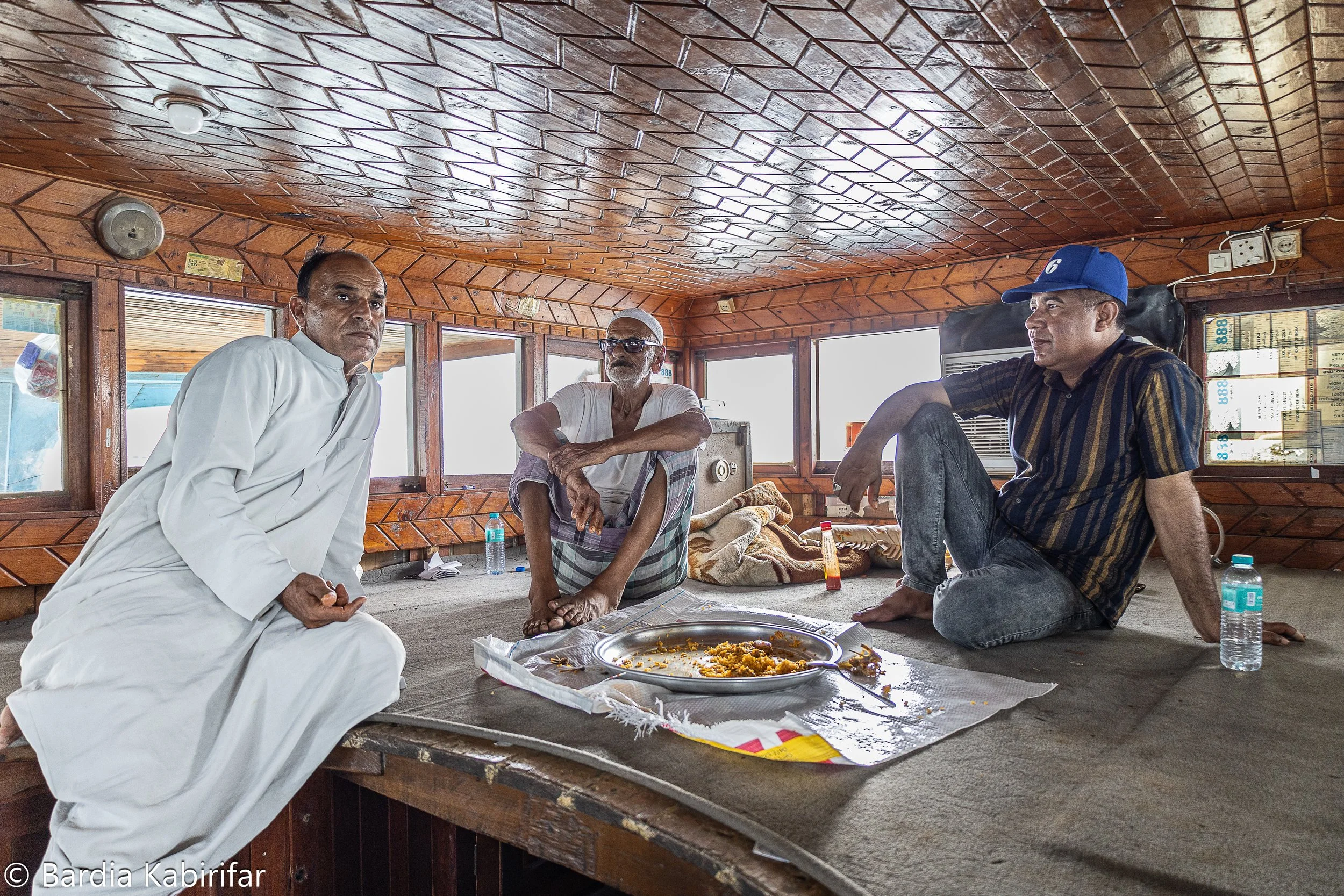
Nakhoda Ismael (center) and his son (left) sitting in the wheelhouse of their Lenj. Most of the times, working with Lenj is a business passed from father to son. After Nakhoda Ismael got retired, his son took over the business. Now, they use the Lenj for trade between Iran and UAE. (October 21st, 2023 Guran, Iran)
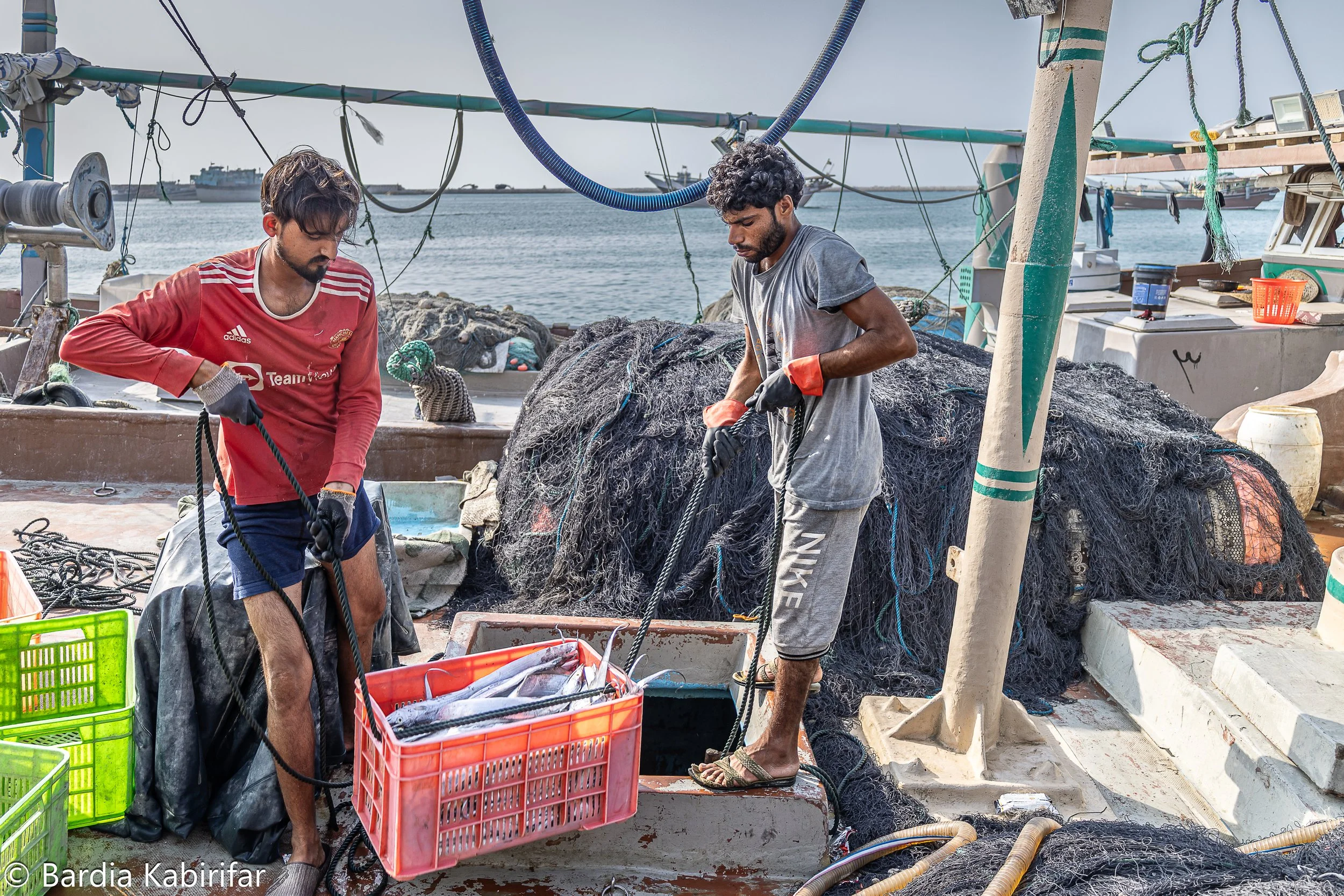
Sailors unloading fish after spending several days on the sea. The catch will be sold in the local market or will be exported to the other countries. Most of the fishermen come here from Sistan and Baluchistan province, which is among the less-developed regions of the country, to find a job. (October 23th, 2023 Kong, Iran)
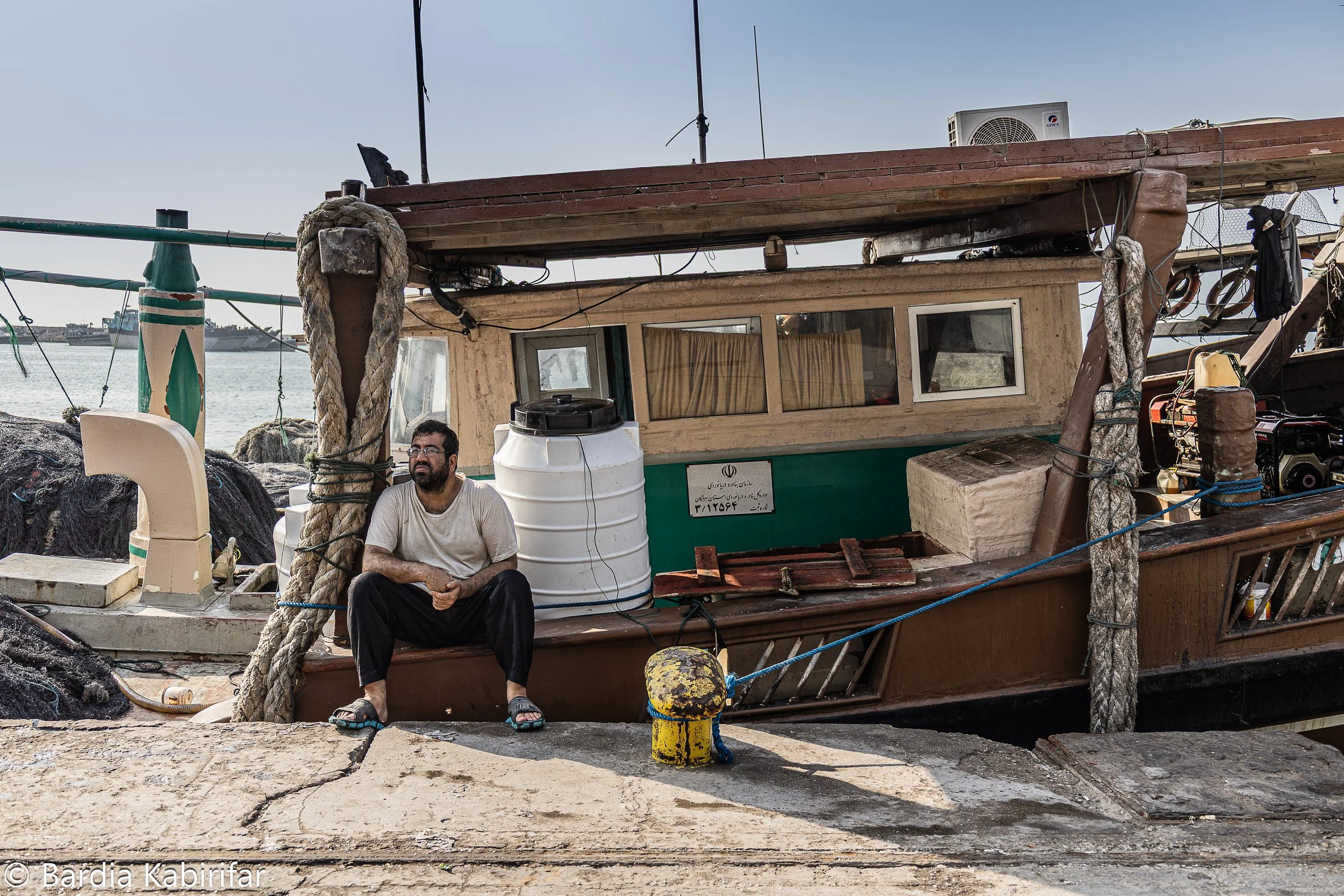
Nader takes rest after spending 9 consecutive days on the sea. Many Lenjs are currently involved with fishing industry. Sailors usually spend 8 to 9 days on board to fish as much as possible and then return to the wharf. Relatively, less crew members (around 5-6) are needed compared to the past. Cook, Nakhoda (Captain), engine engineer, and 2-3 sailors are enough to set off. (October 23th, 2023 Kong, Iran)
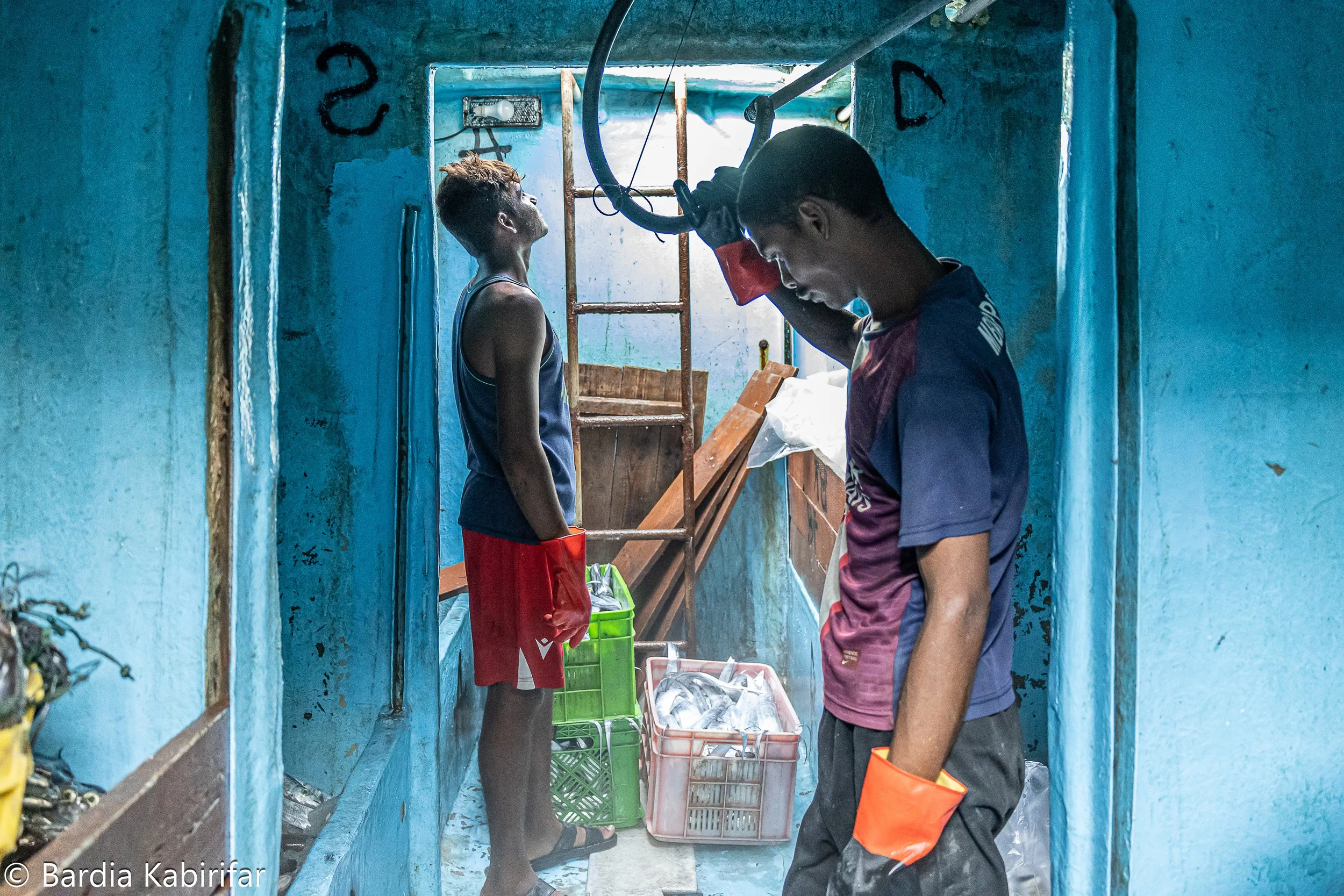
Sailors unloading fish after spending several days on the sea. Working as a sailor in a fishing Lenj is extremely hard. Sailors spend more than a week asea, rest for 2 - 3 days and again go back to the sea. Most of the sailors come from less-developed regions of the country to find job. (October 23th, 2023 Kong, Iran)
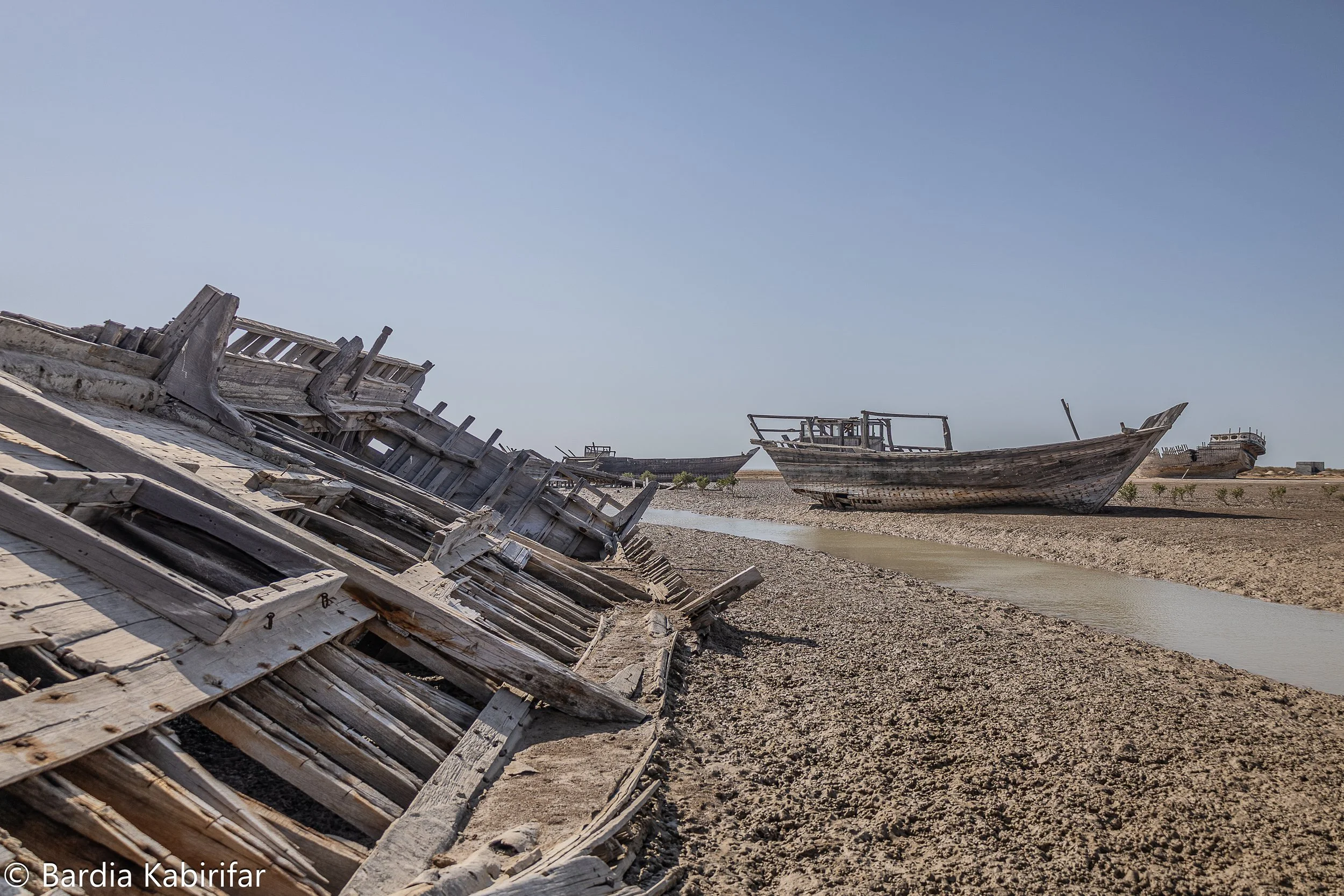
A vast area known as the graveyard of Lenjs where dozens of wrecked vessels can be seen all around. Although wooden Lenjs can be in service for several decades, provided that they receive proper maintenance, some Lenjs are not fortunate enough to have an owner who can afford the high costs of annual repair. Some Lenjs might end up here or simply get abandoned. (October 22nd, 2023 Bushehr, Iran)