
Q’eros: Guardians of Inca Traditions
The Q’eros are among a few Quechua-speaking communities in Peru who strongly hold to their ancestral traditions. Their spiritual beliefs are rooted in Inca’s and Andean cosmovision in which various natural spirits are worshiped including the spirit of earth, moon, sun, water, and mountains. They are divided into five main groups with around 10 – 15 villages. The villages are located in remote Peruvian Andes, at high elevations, with not very fertile ground. Most of the houses are made of stone with straw roofs. There is no heating system for the houses except wood that is used for the cooking. Recently, some solar panels are installed in the villages by NGOs to provide electricity and hot water for bathing. Villages usually have school but the highest grade varies between villages beyond which, students need to attain schools in the other villages or nearby towns.There are two main seasons, dry season from April to October with very cold nights and wet season from November to March with frequent rain and cold weather. Due to harsh climate condition, only potatoes can be grown and only alpacas and sheep can be kept. Anything except potato and meat needs to be brought from nearby cities, including wood for cooking, as they can’t be found at such high elevations. 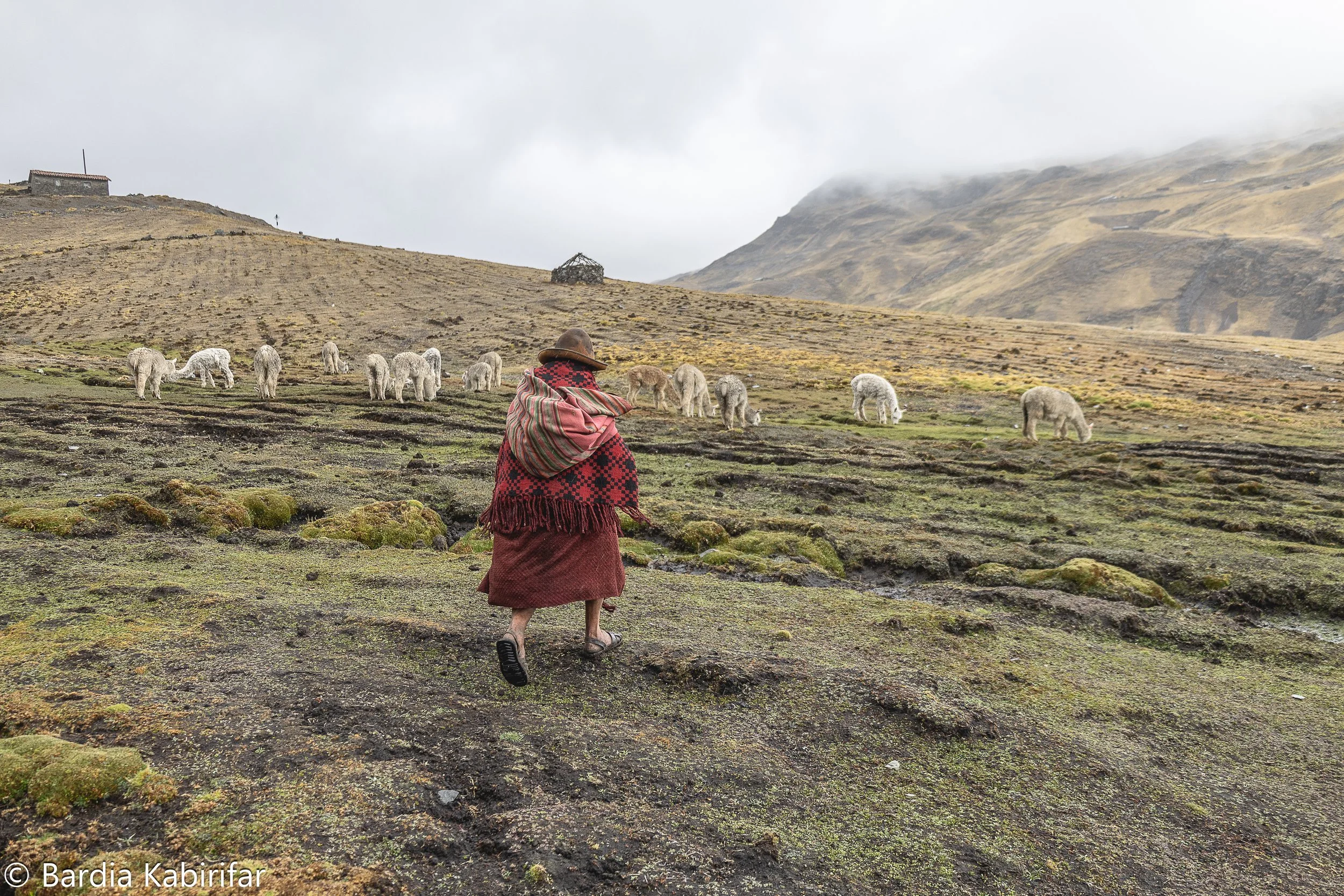
Maria is shepherding her son's Alpaca herd. Due to harsh climate and high elevation, Alpacas are one of the only animals which can be grown here. (October 29th, 2024 Cusco Department, Peru)
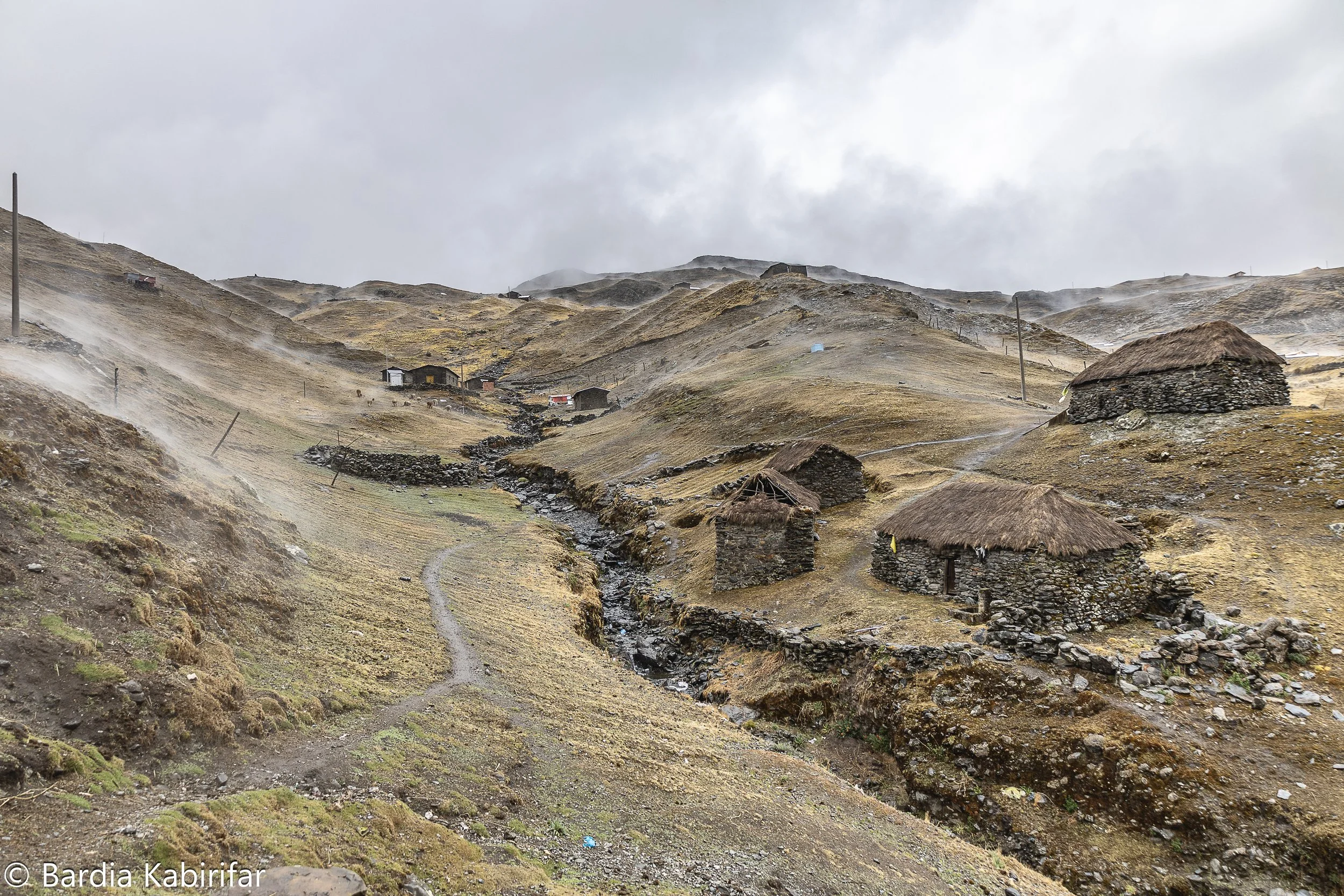
Chua Chua village is one of the few Qero villages in the Cusco department of Peru. Located at high elevation of 4400 m above the sea level, Qero villages are home to one of the last Quechua speaking communities who are still holding to their ancestral traditions. Most of the houses are made of stone and straw roofs. Each village has a school and several solar panels which were recently installed by NGOs to provide electricity and warm water. (October 29th, 2024 Cusco Department, Peru)
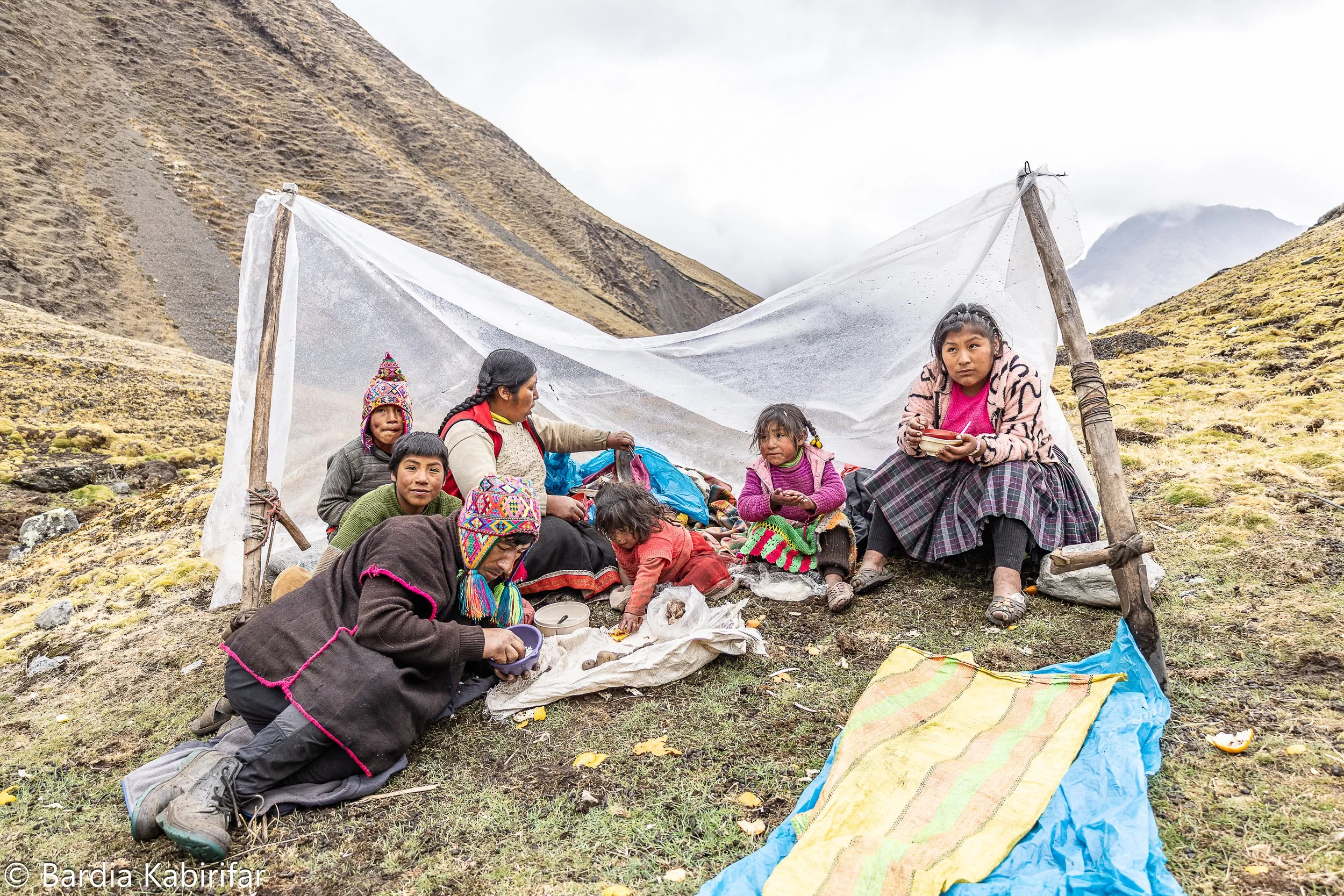
Bernabe and his family taking rest after working on the land for several hours. Terrain morphology is complicated in this region with often small, steep, and narrow pieces of land which can’t be used for more than a year in every 5-years. Every year, each family has a short period of time, around a month that usually coincides with October, to prepare its field and sow enough potato plants, which is the most common and resilient crop in the region that constitutes the community’s staple food, to sustain the whole family for a year. (October 31st, 2024 Cusco Department, Peru)
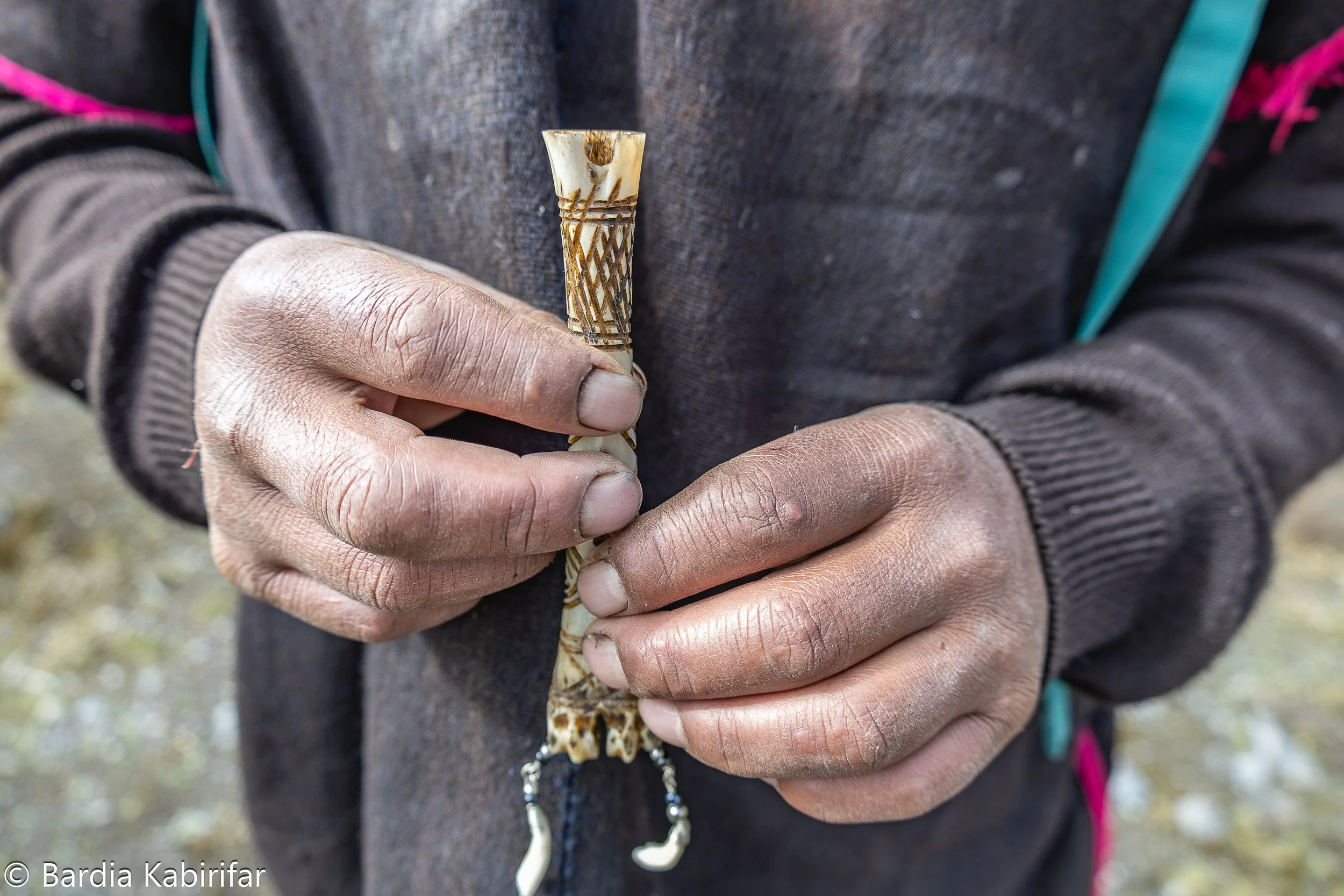
Bernabe holding his traditional flute, made of Alpaca bone, which is used for playing sacred melodies. Q'eros are among the communities who dedicatedly follow their ancestral traditions including the lifestyle and spiritual believes. (October 30th, 2024 Cusco Department, Peru)
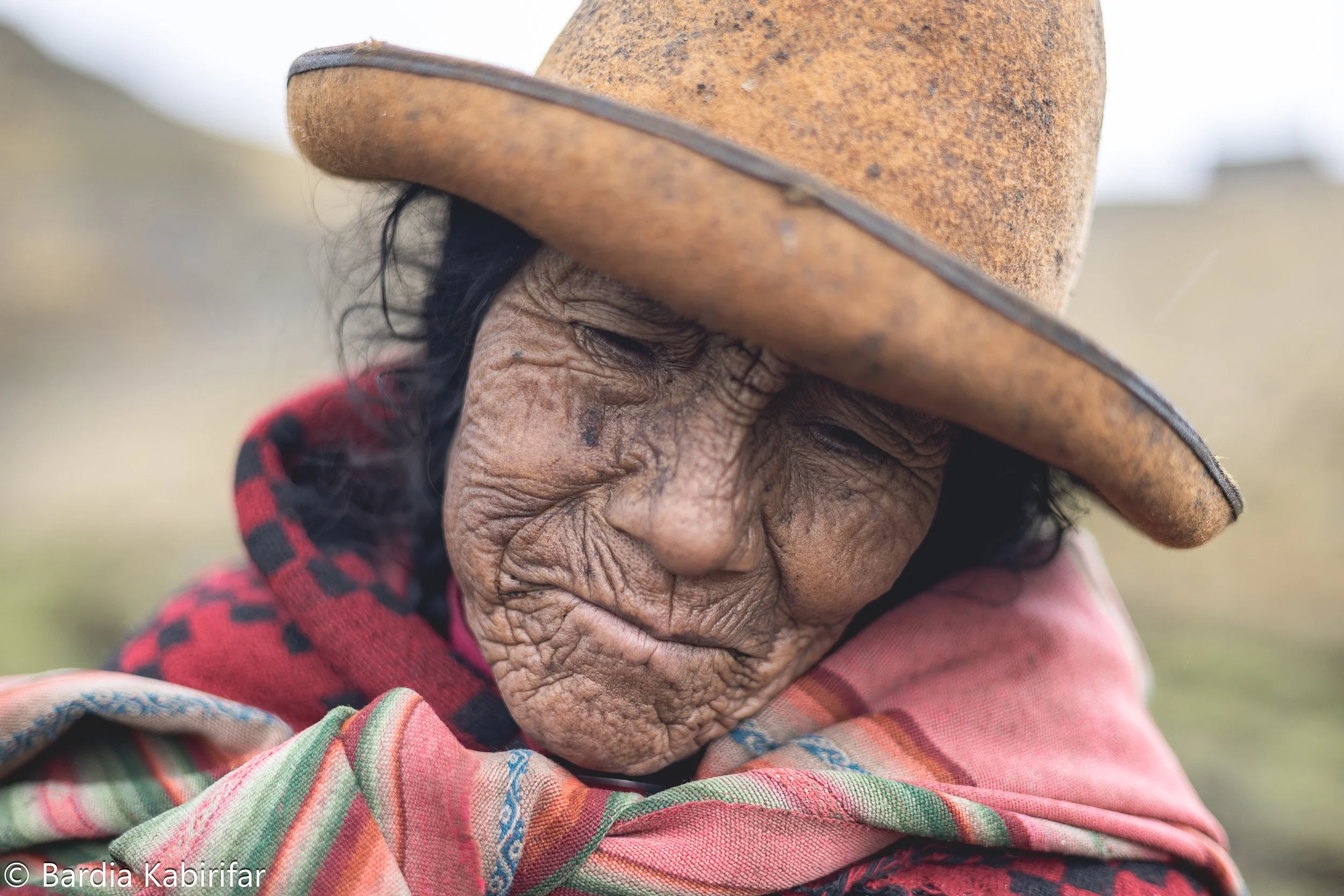
Maria is shepherding her son's Alpaca herd. To survive in the harsh weather condition where Q'ero villages are located, the effort and contribution of all family members is needed. This enables Q'eros to maintain their ancestral lifestyle. (October 29th, 2024 Cusco Department, Peru)
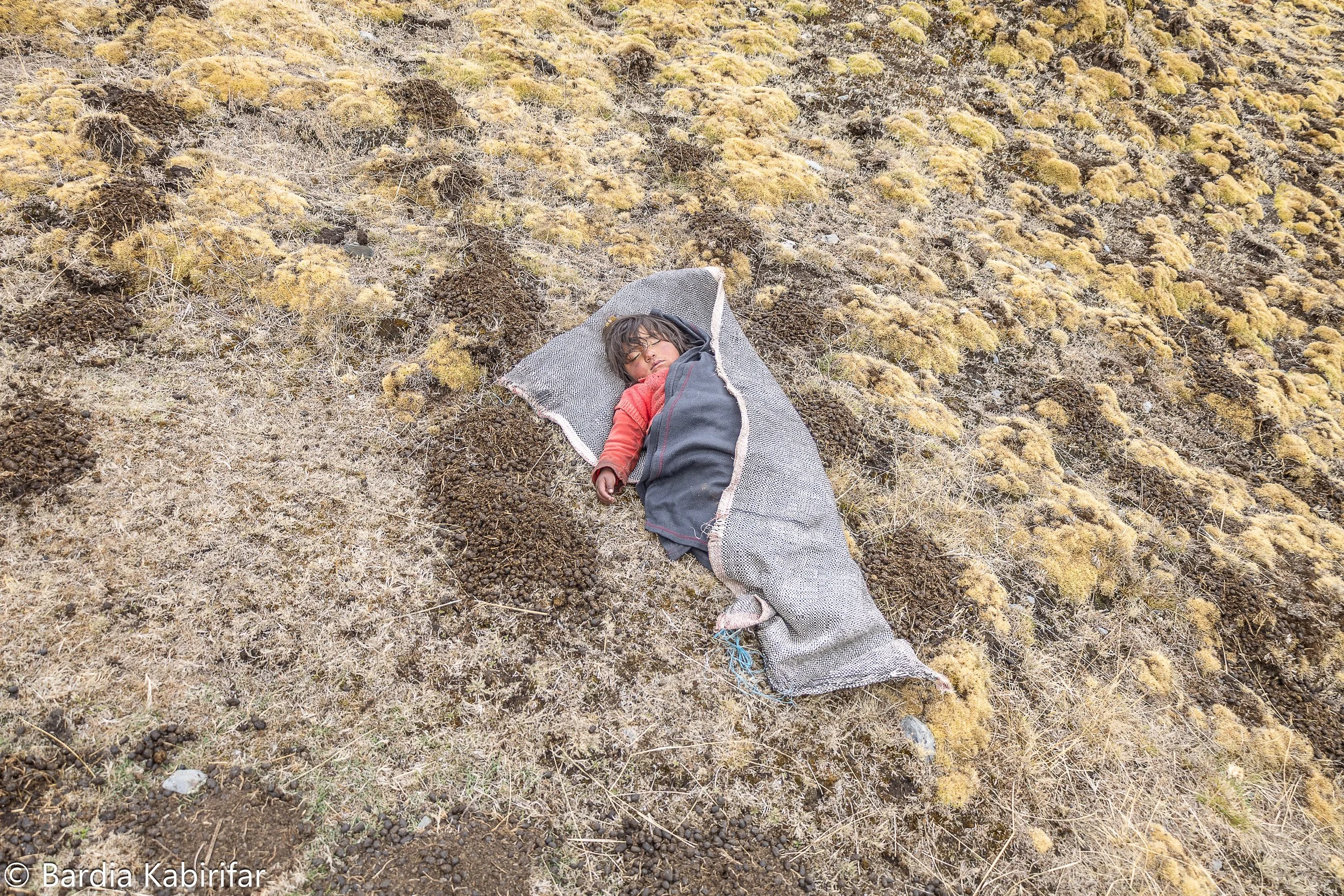
Maria, the youngest child of the family, sleeping in the field while her family is working on the land. The season of field preparation and sowing is very vital period of time for all families as missing the opportunity means that the food needs to be bought in the cities and be brought up to the villages, which is not really feasible due to the lack of financial resources and extreme remoteness of the region. (October 31st, 2024 Cusco Department, Peru)
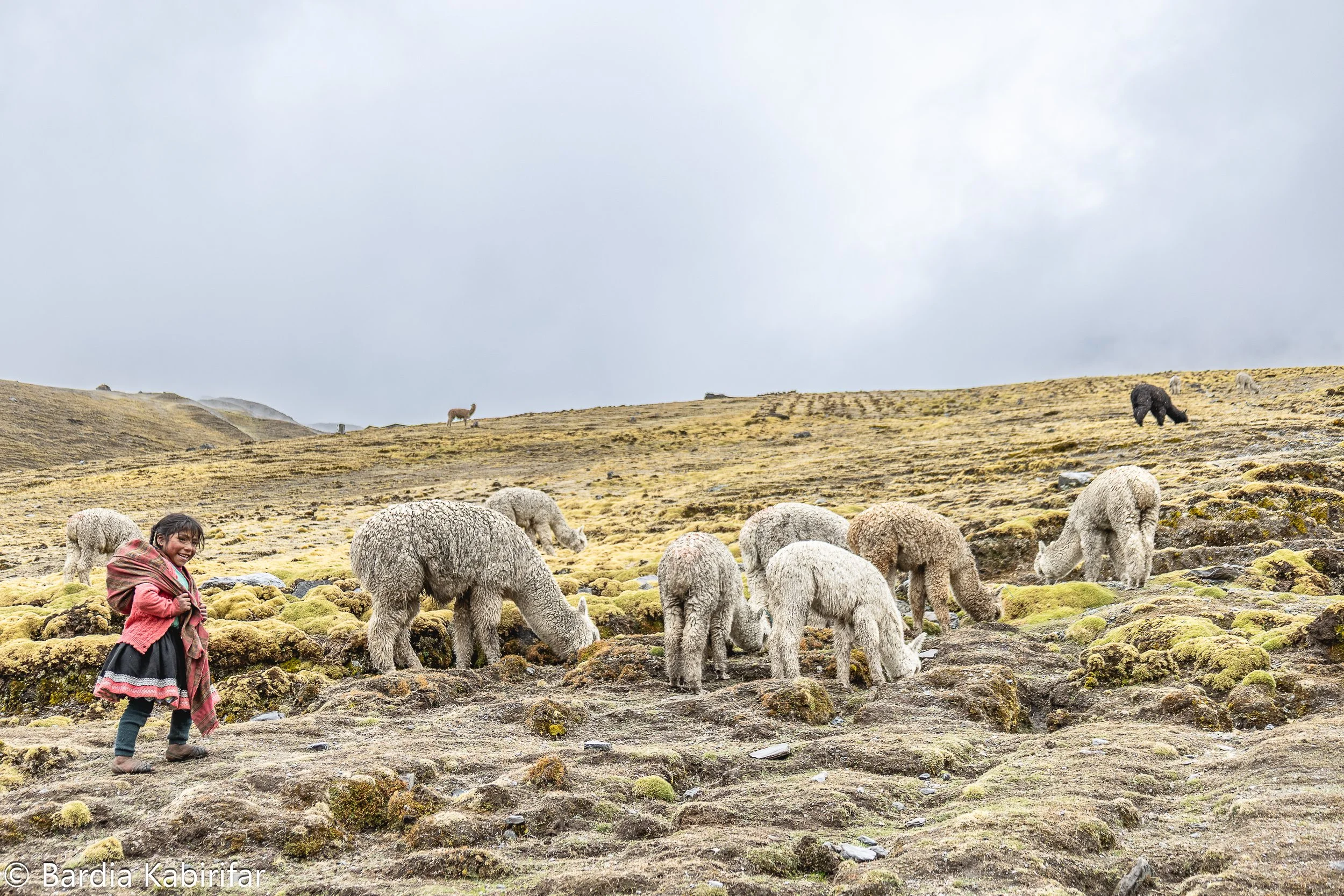
Paloma shepherding her family's Alpaca herd (October 31st, 2024 Cusco Department, Peru)
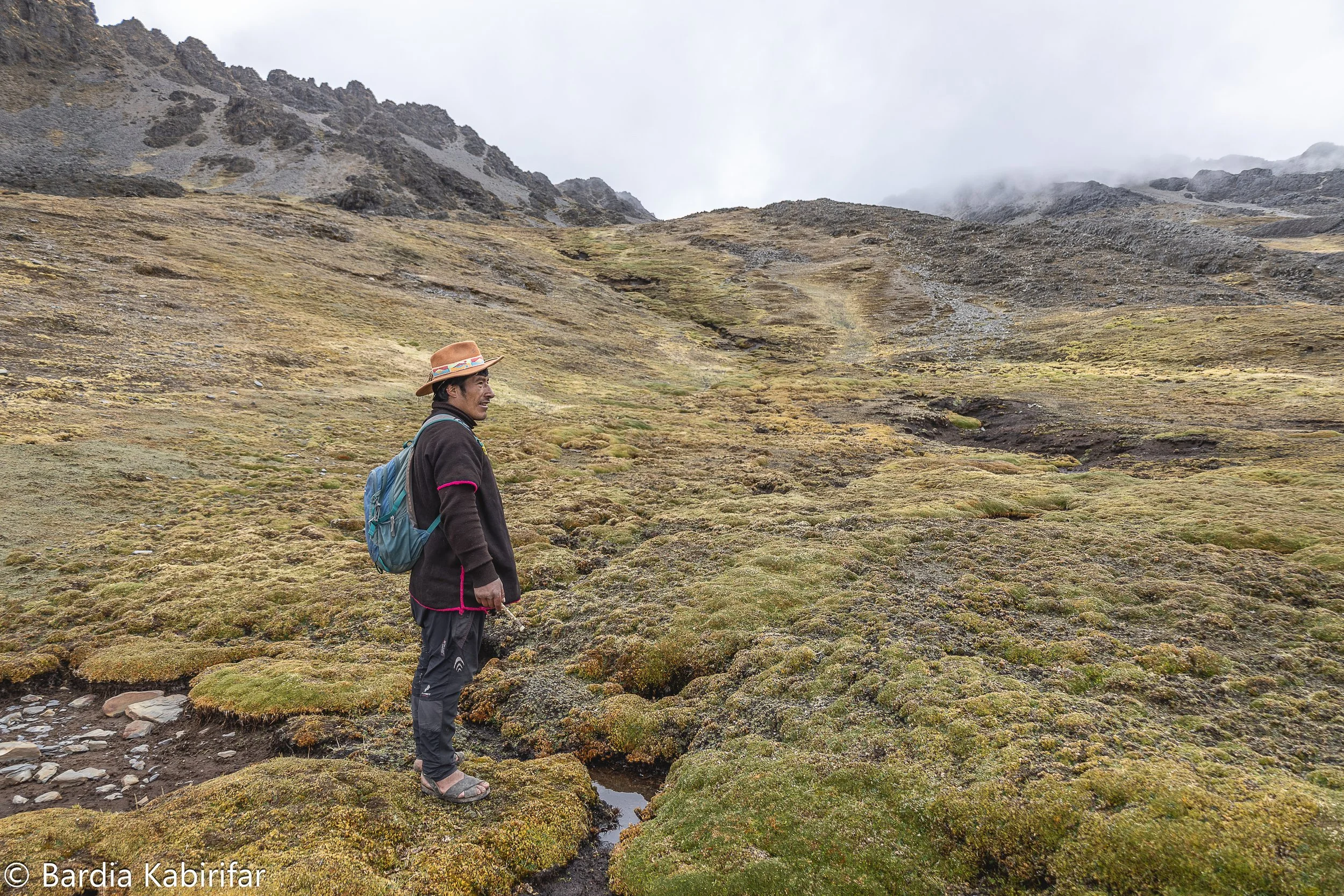
Bernabe heading to a sacred mountain for an spiritual ceremony. Q'eros are among very spiritual communities whose beliefs are inherited from their Inca ancestors. (October 30th, 2024 Cusco Department, Peru)
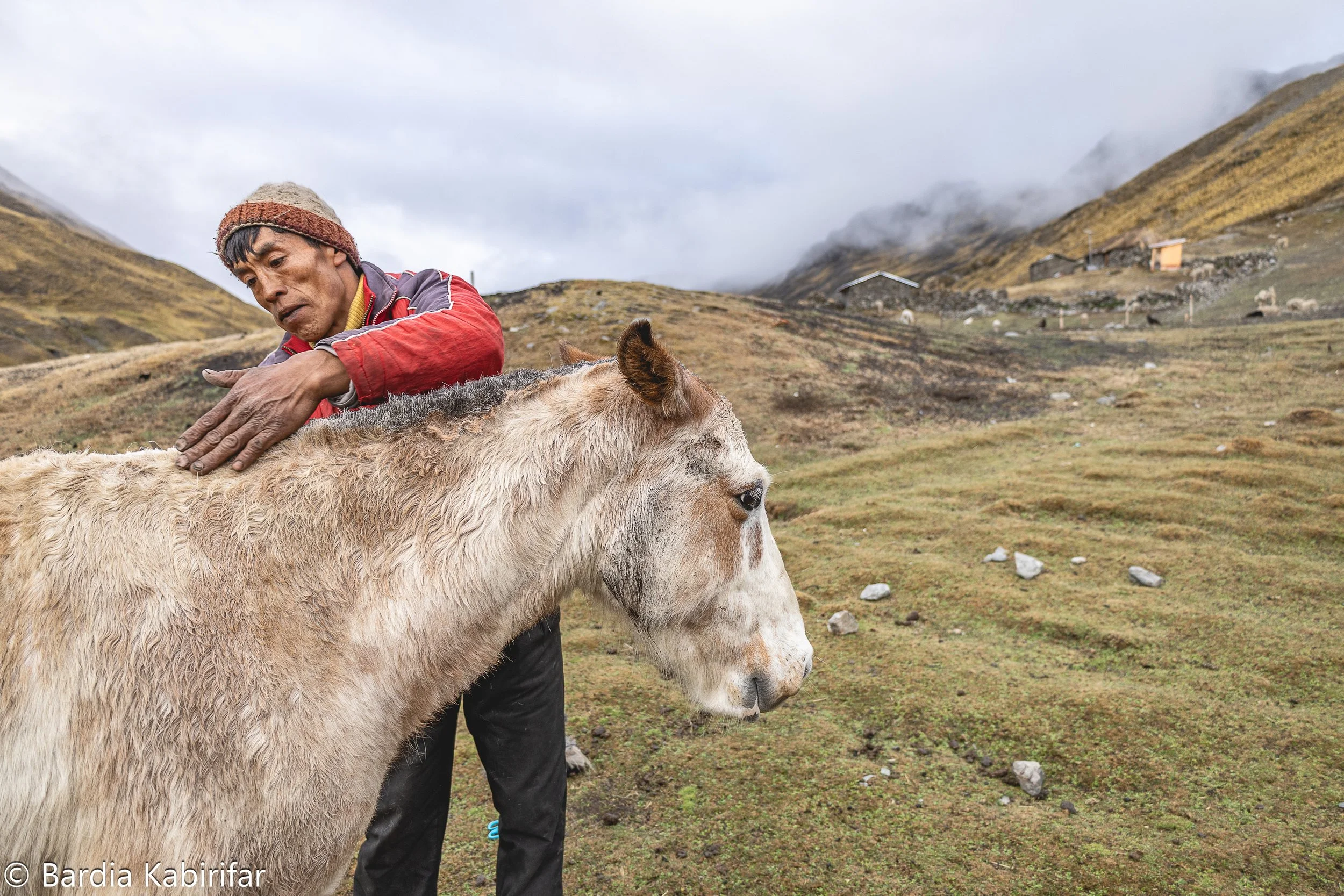
Venito is hogging his horse's mane. Only a few horses can be seen in the village because harsh climate and high elevation makes it quite hard to grow anything except Alpaca. (October 29th, 2024 Cusco Department, Peru)
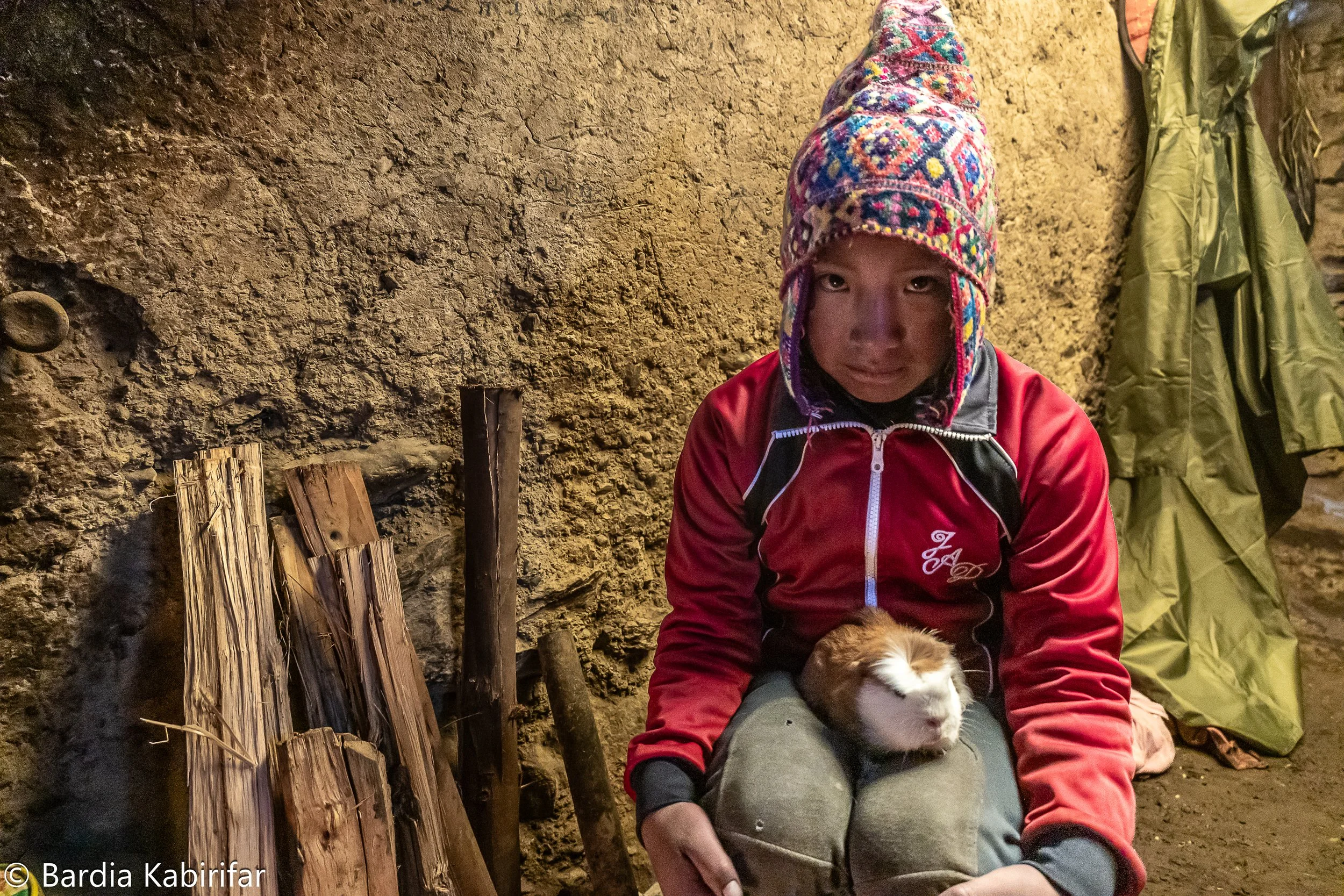
Italo and his Guinea pig (October 29th, 2024 Cusco Department, Peru)
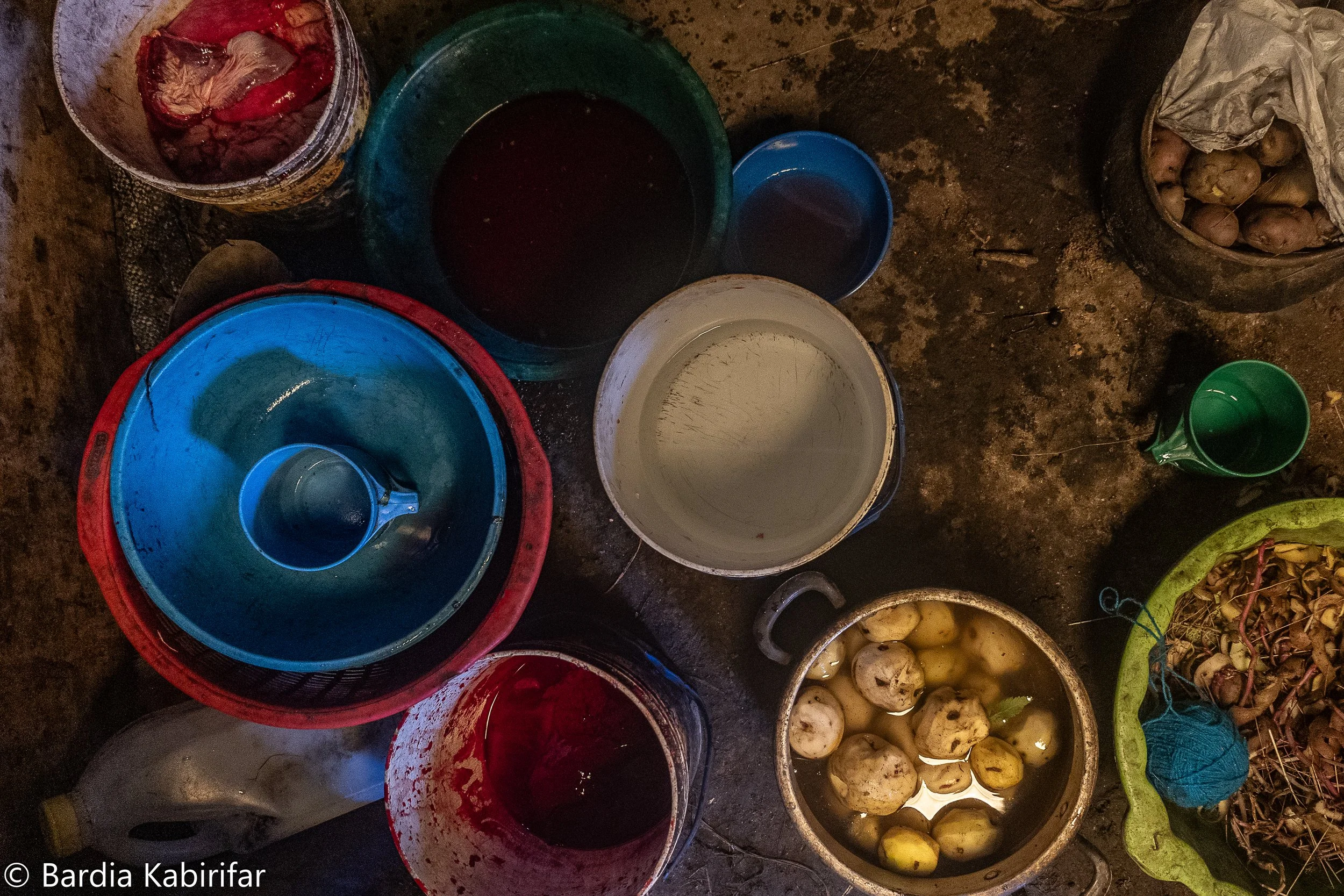
Due to high elevation and harsh climate, potato is one of the only crops that can be harvested in this region which is staple diet of Q'ero people. (October 30th, 2024 Cusco Department, Peru)
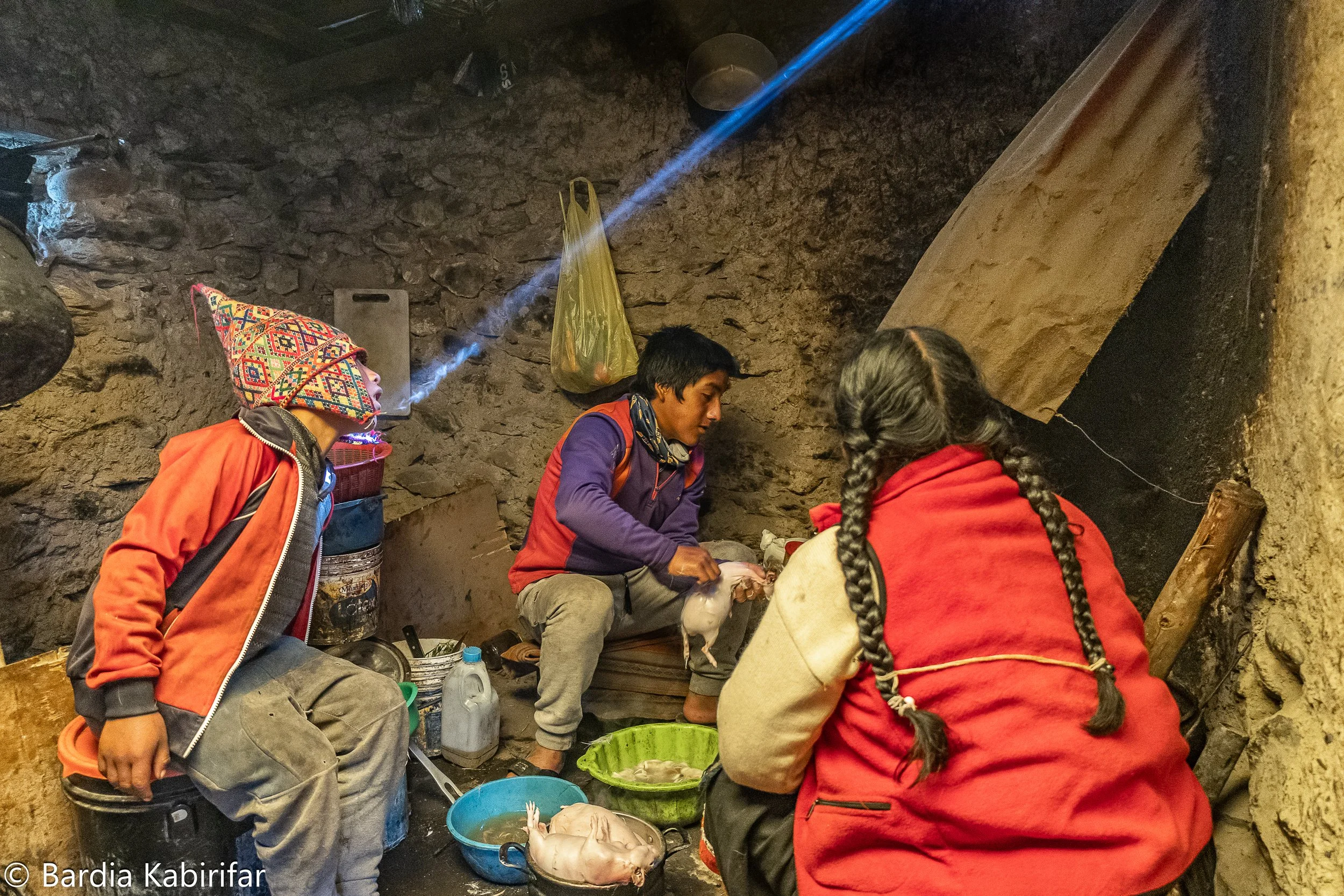
Elvis is preparing Guinea pig as a special holiday lunch. Commitment to the traditions, despite harsh living conditions, can be seen everywhere in Q'ero communities. (November 1st, 2024 Cusco Department, Peru)
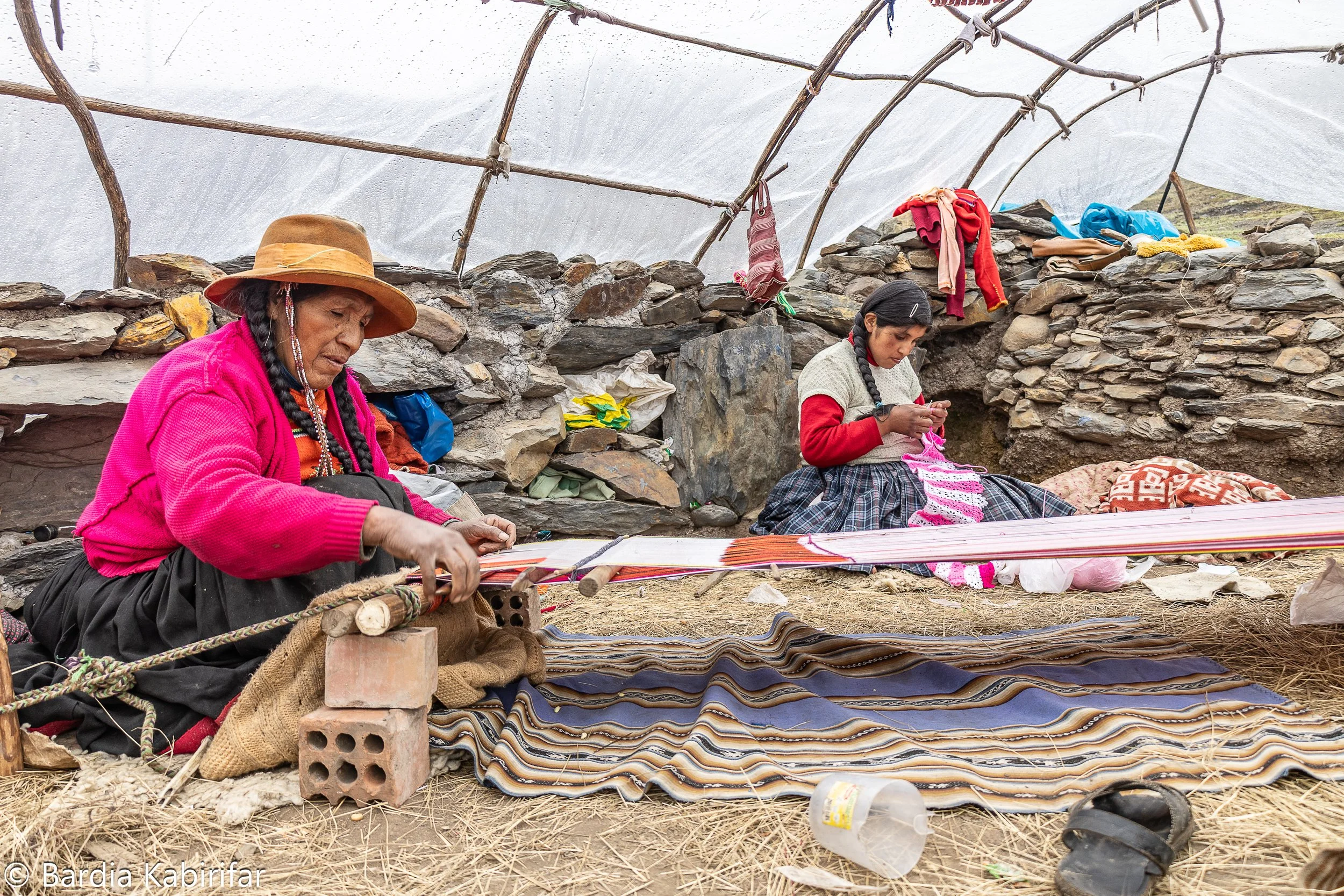
Karmena weaving a poncho out of Alpaca wool. Textiles are one of the main sources of income for Q'eros. A huge part of the textile market in the nearby cities, however, is taken over by the factories which often produce low quality textiles and sell them with very high prices. (October 30th, 2024 Cusco Department, Peru)
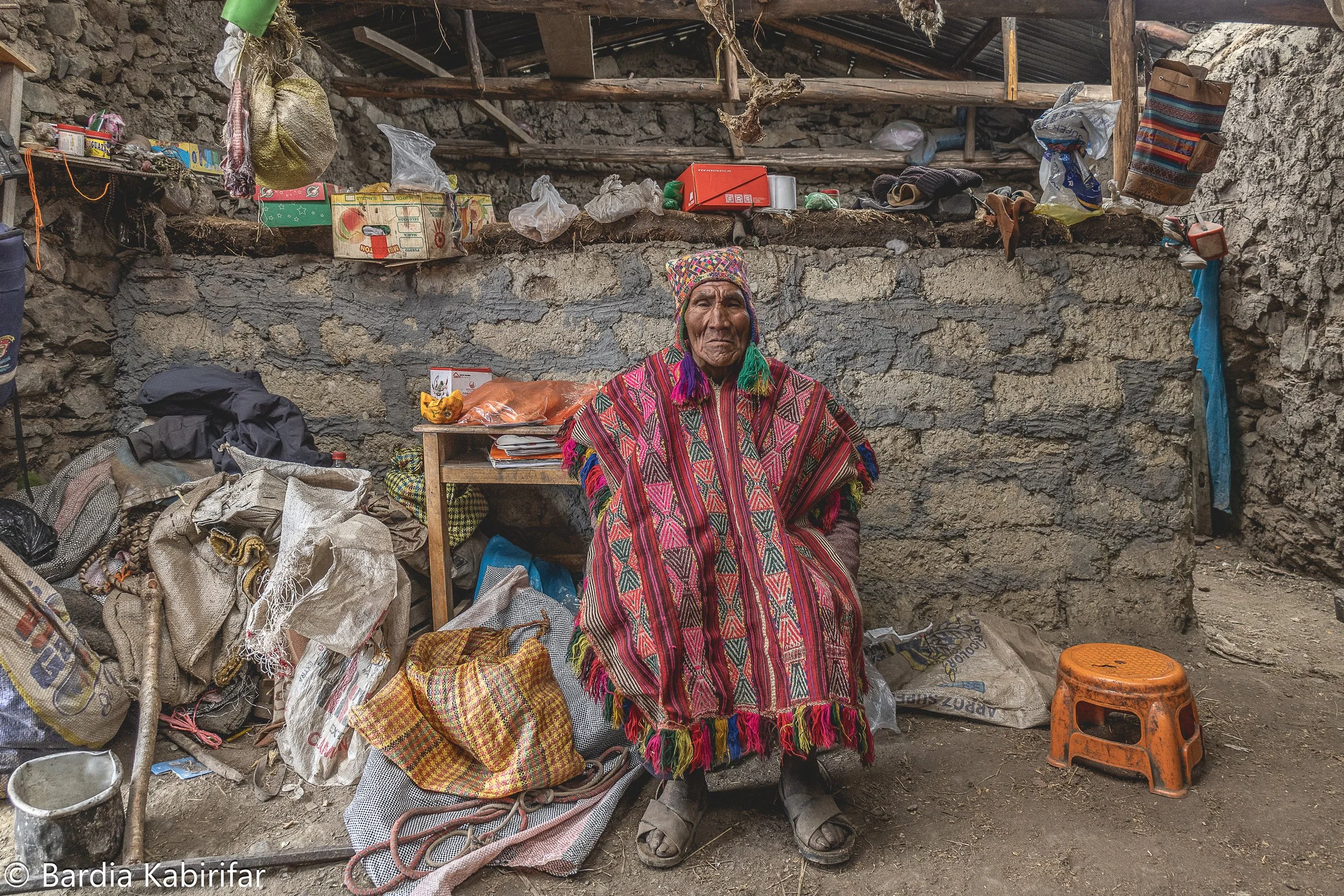
Andres Paukar sitting in his house wearing a traditional Q'ero poncho and hat. Q'ero houses are usually made of stone with straw roofs and the internal space is used simultaneously for sleeping, cooking, and storage. (Cusco Department, Peru October 29th, 2024)
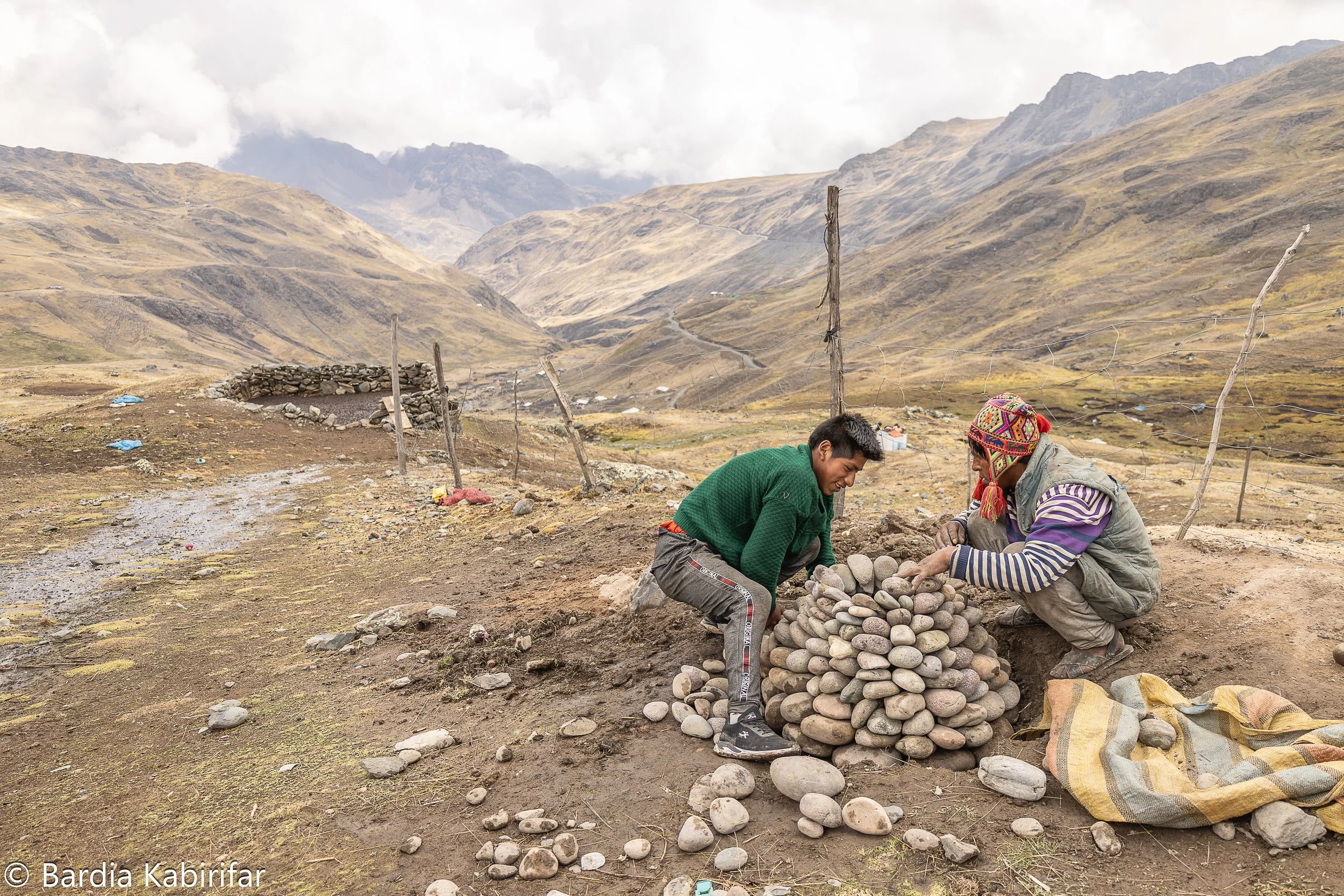
Juvinal making a traditional stove as a part of the preparations for a traditional ceremony. November 1st, 2024 Cusco Department, Peru)
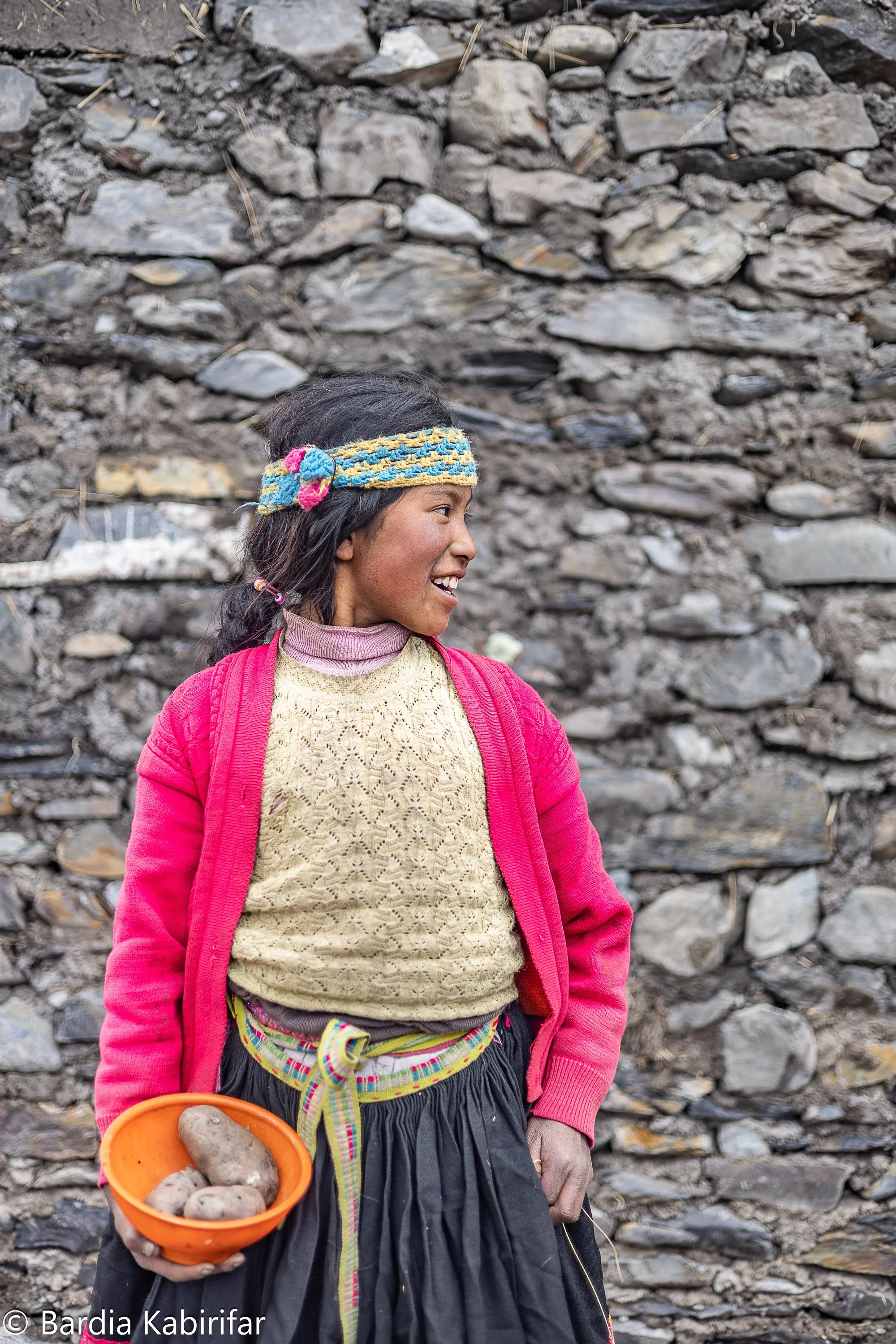
Anig serving visitors with potato. Due to climate, only a few crops can be harvested in the region among which, various types of potato are the most common and resilient ones that constitute the staple diet of Q'eros people. (October 29th, 2024 Cusco Department, Peru)
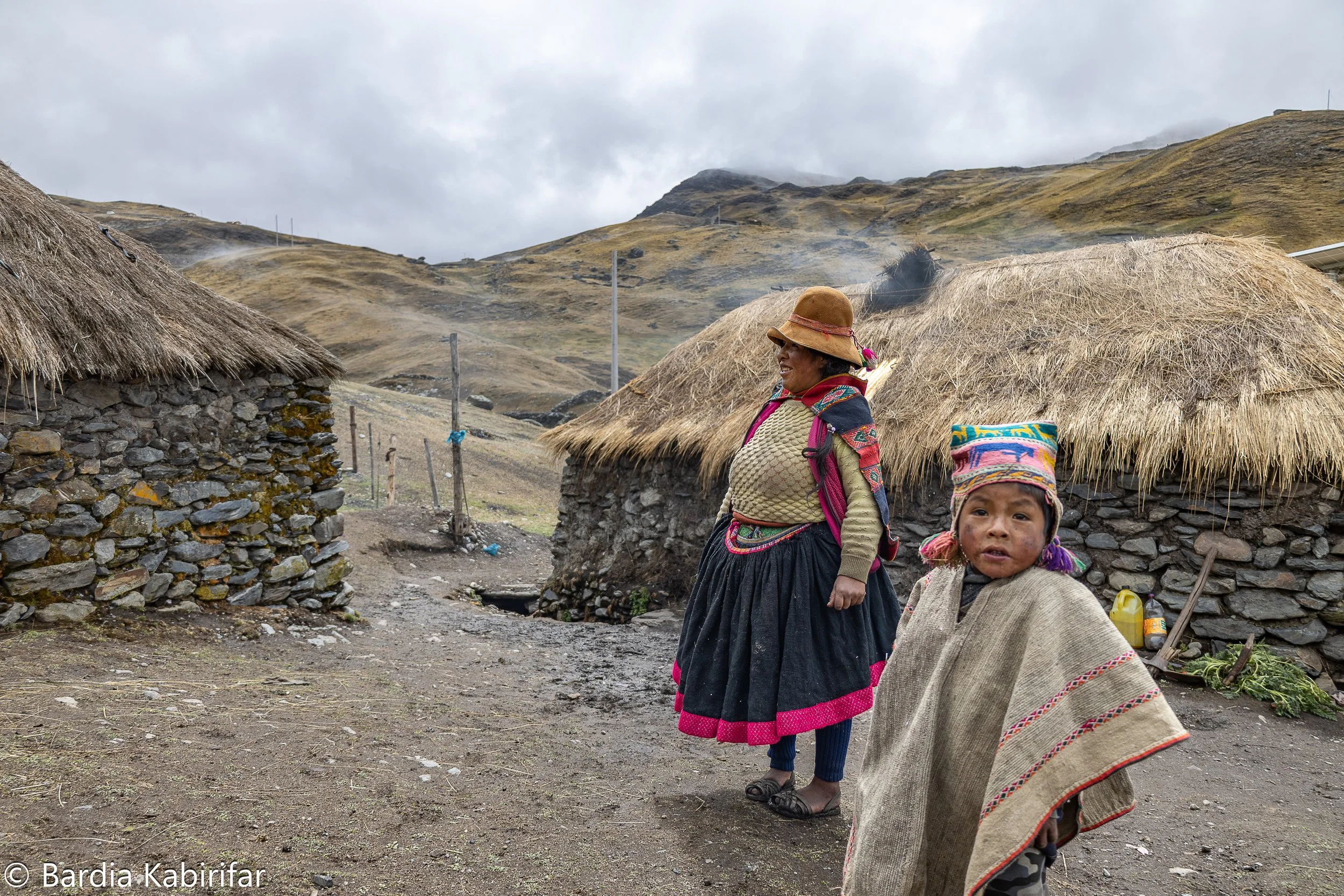
Romasa and her boy in front of their house (October 29th, 2024 Cusco Department, Peru)
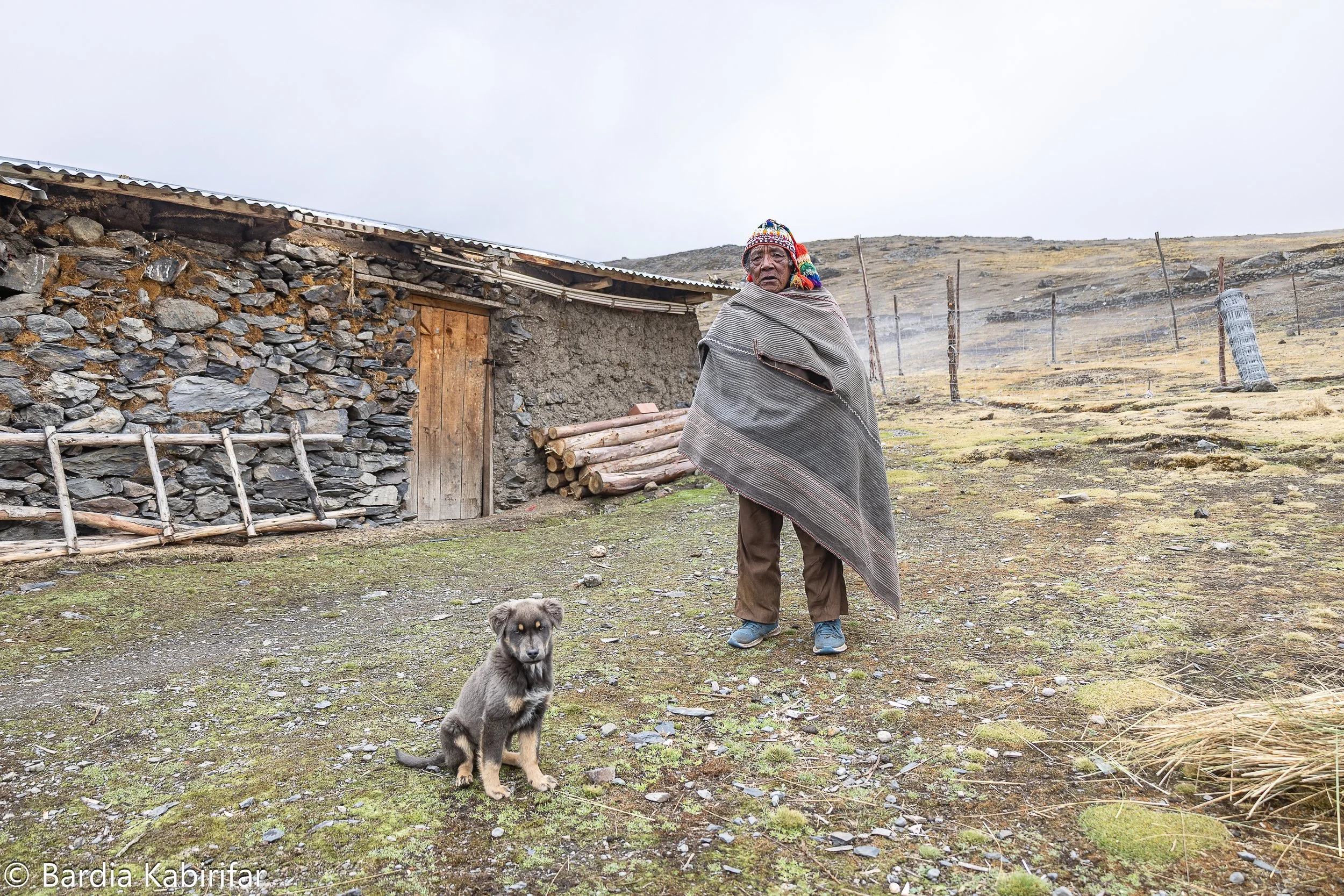
Lorenzo standing in front of his house located at Chua Chua village. (October 31st, 2024 Cusco Department, Peru)
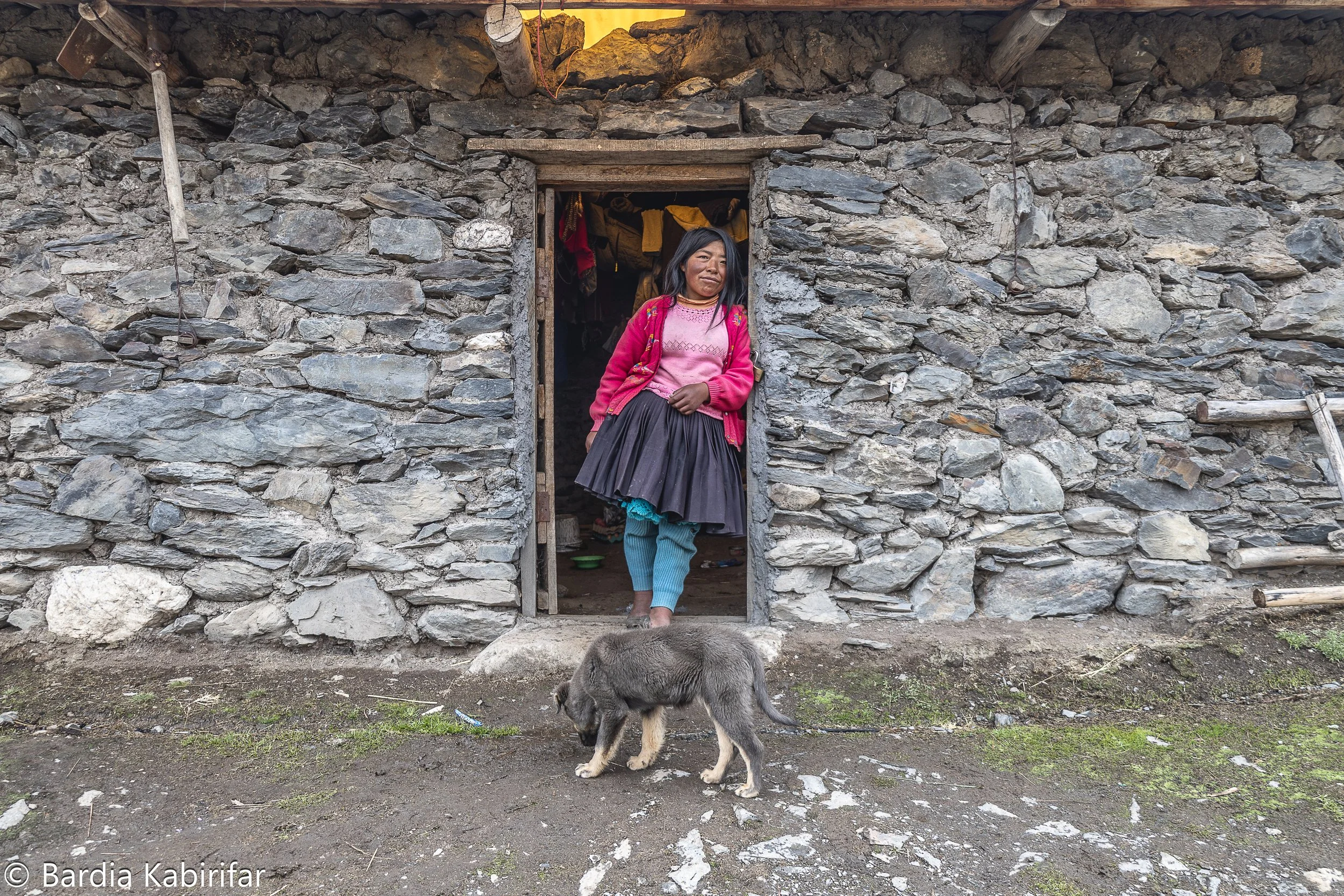
Rebeca in front of her house (October 31st, 2024 Cusco Department, Peru)
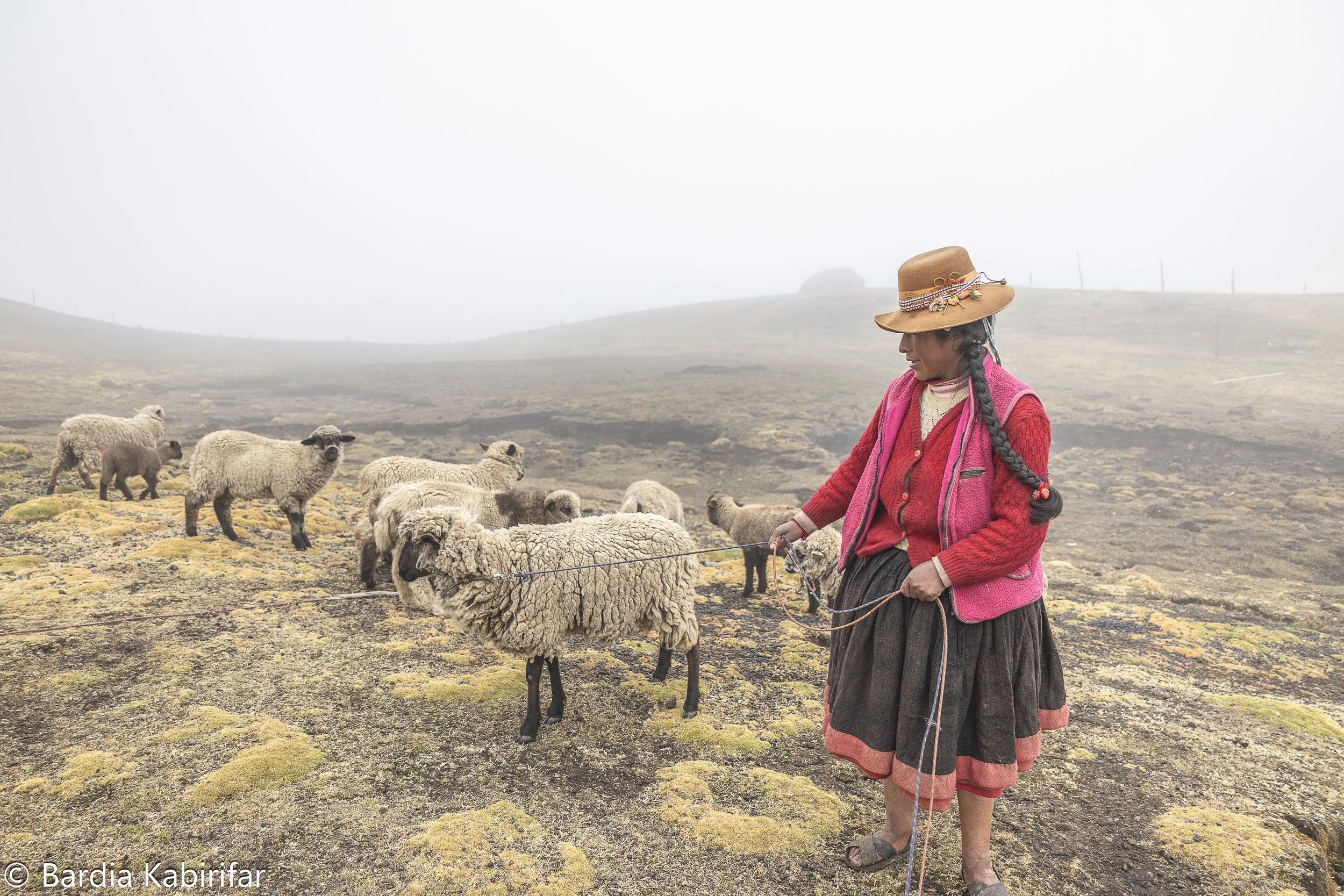
Virginia shepherding her sheep. Sheep are among a few domesticated animals which can live at such high altitudes. (October 31st, 2024 Cusco Department, Peru)
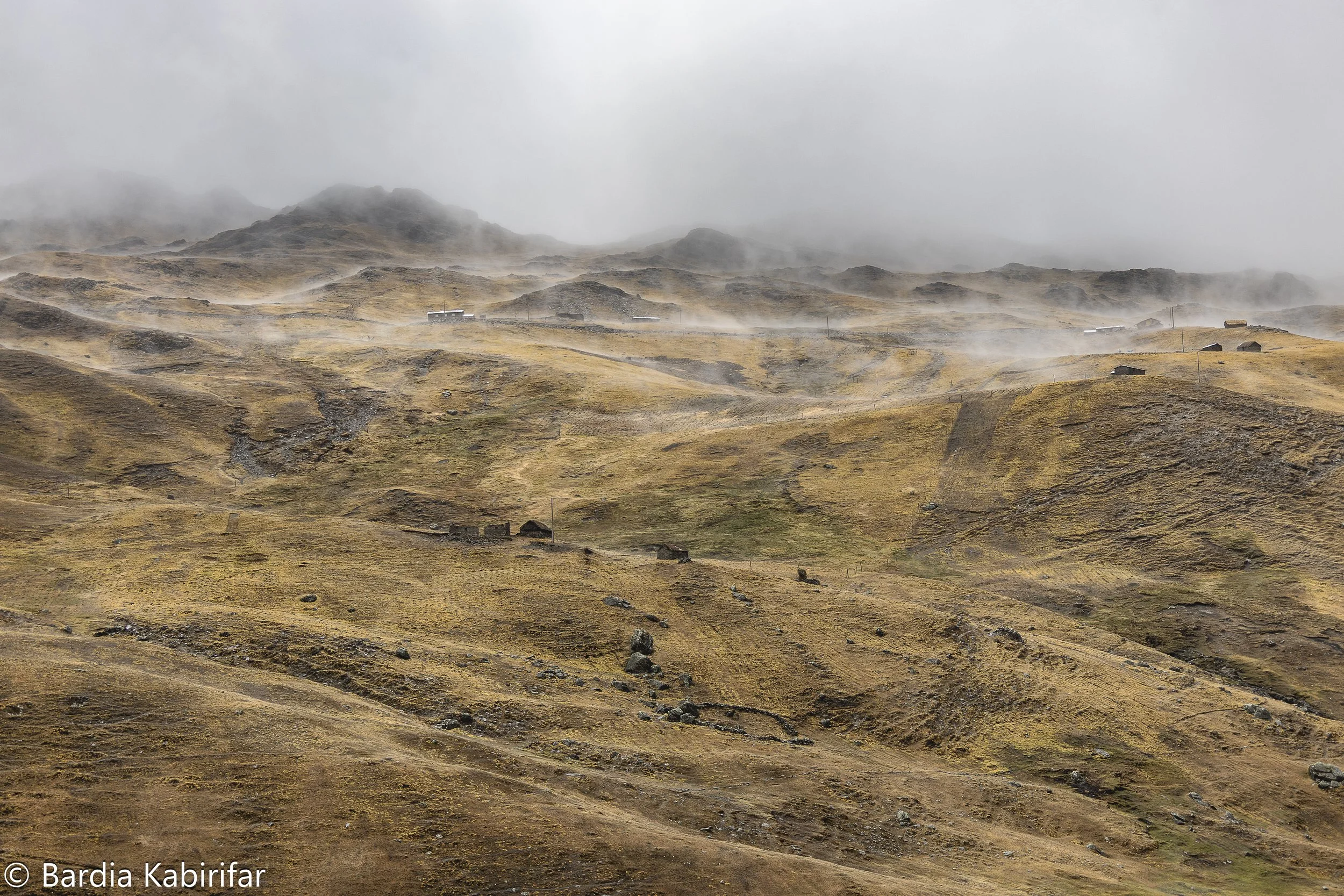
Qeros are known for their living skills at high altitudes with many of their villages located between 4000 to 5000 meters above the sea level. High altitudes, however, brings various challenges from unpredictable and often cold weather which gets worse considering the lack of resources to warm up the houses, and limits the options of harvested crops as well as animals. (October 29th, 2024 Cusco Department, Peru)